Hardcore Zen
A New Method for Creative Leadership
Just as the Growth-Share Matrix defined corporate strategy and the Magic Quadrant defined technology strategy for half a century of expansion, Hardcore Zen defines the next era: structural re-imagination when the territory itself must be redrawn.
Hardcore Zen is Blue Spoon's original leadership method for organizations caught between what worked and what's required. It combines systems theory, market design, and narrative architecture to help leaders escape doom loops and design new economic ecosystems.
Exit from collapsing systems requires a narrative turn: new language that unlocks new market structures, repositioning where power sits, how value flows, and what strategy actually means when the old playbooks have stopped working.
What Hardcore Zen Does
Reframe the Terrain
Identify remnant context — obsolete models still shaping decisions — and design clean breaks. The first move is seeing the frame that's holding you in place.
Design New Economic Systems
Create economic ecosystems that align incentives, absorb feedback, and generate self-sustaining markets. Unified organisms, not disconnected components.
Build Narrative Architecture
Develop the language and story structures that make new markets legible and actionable. Strategy without narrative is a plan no one can execute.
Leaders Navigating
From the Whiteboard
Each frame below is a working output from a Hardcore Zen session — the conceptual tools we use to reframe competitive terrain, design new systems, and build narrative architecture. Schedule a whiteboard to see what they look like applied to your business.
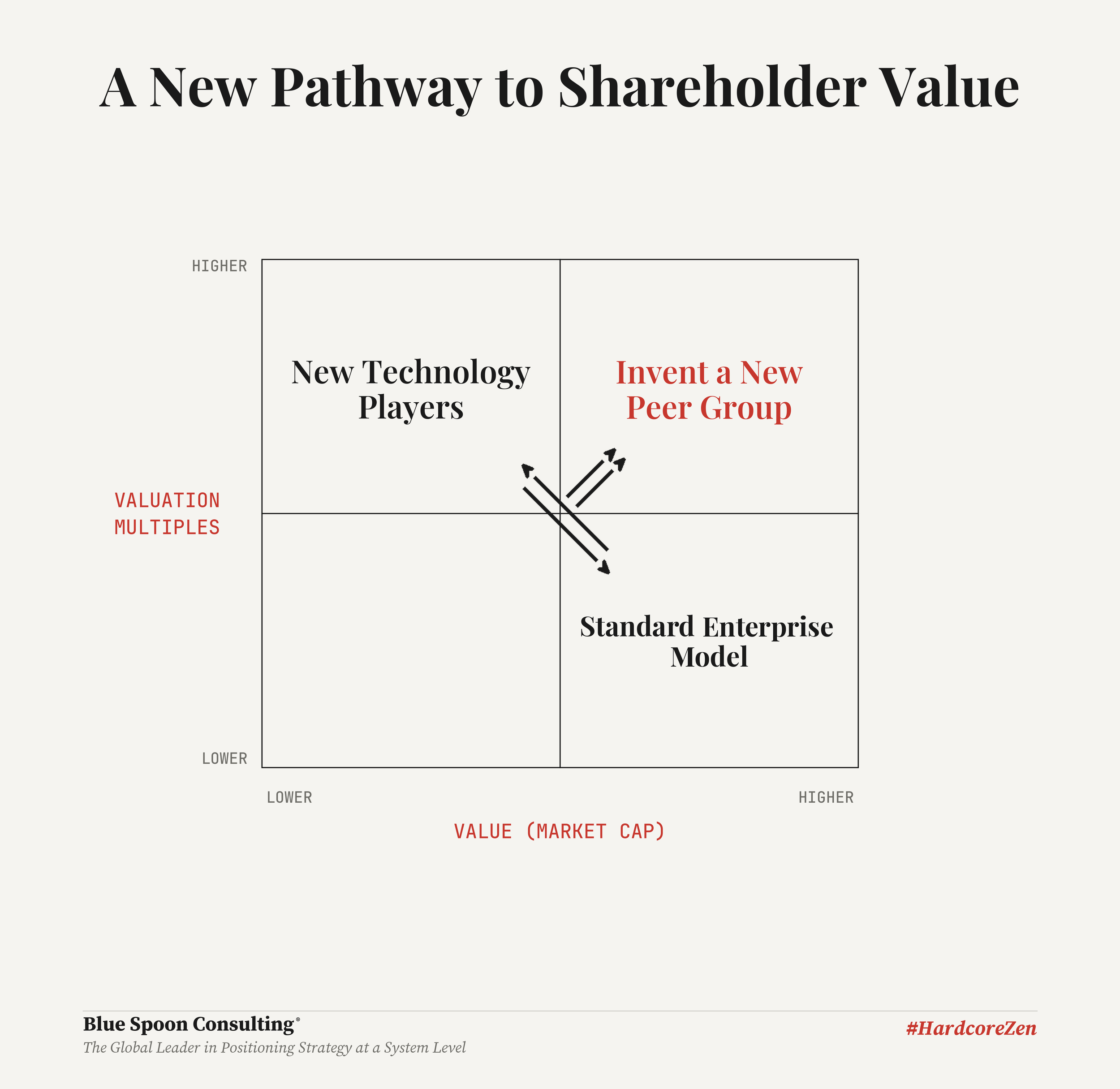
A New Pathway to Shareholder Value
When everyone gets their hands on the same "amazing" technologies, and everyone deploys them in the same "amazing" way, what you end up with isn't progress, but a great flattening, a sea of sameness rolling out to the horizon, awe-inspiring only in its sheer, monotonous scale.
Right now most big technologies are stray thoughts without a narrative. We have smartness without direction.
Standard Model Pharma sits in the lower right — high market cap, lower valuation multiples. Big revenue, big pipelines, priced like utilities. The market has already decided what they are and what they're worth. The story is priced in. New Technology Players sit in the upper left — higher multiples, lower market cap. The market is paying a premium for the narrative, betting on trajectory over proof.
The opportunity: invent a new peer group. Architect a new market category where the rules, the metrics, and the value creation logic are fundamentally different.
Be Like Crab
The invisible hand has designed systems to compete where coordination is required, then trained them to seek equilibrium in environments that never stop moving.
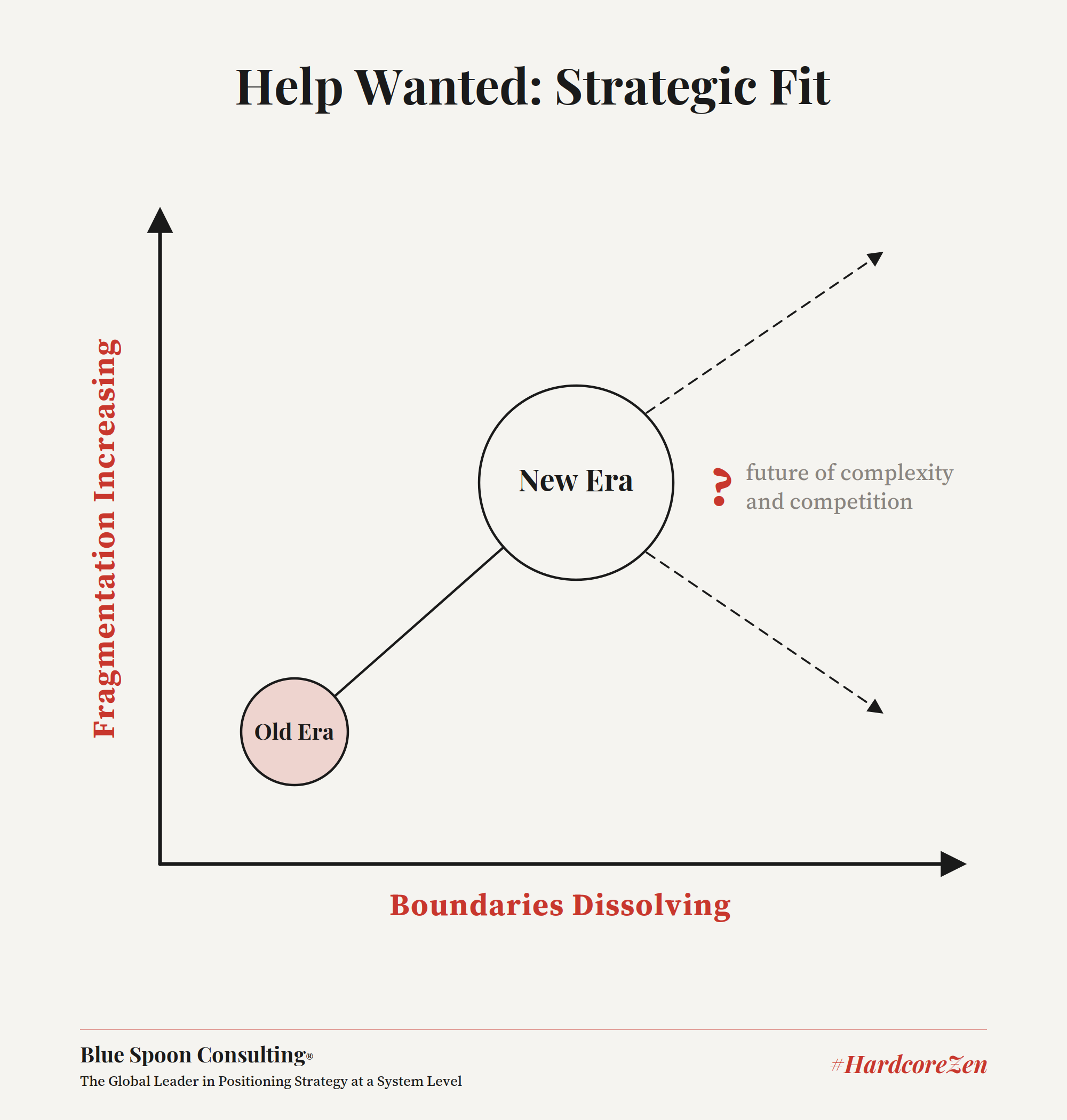
The old era was small, bounded, and manageable. The new era is none of those things. Boundaries are dissolving. Fragmentation is increasing. And the future of complexity and competition is heading in two directions at once — neither of which is backward.
What's required now is motion of an entirely different order — call it 'crab logic': sideways, oblique, opportunistic, sensing its way through fragmenting boundaries and rising complexity like an organism evolved for precisely this terrain.
The Next Magic Quadrant
Gartner's Magic Quadrant maps vendors inside an existing market. This maps the market itself.
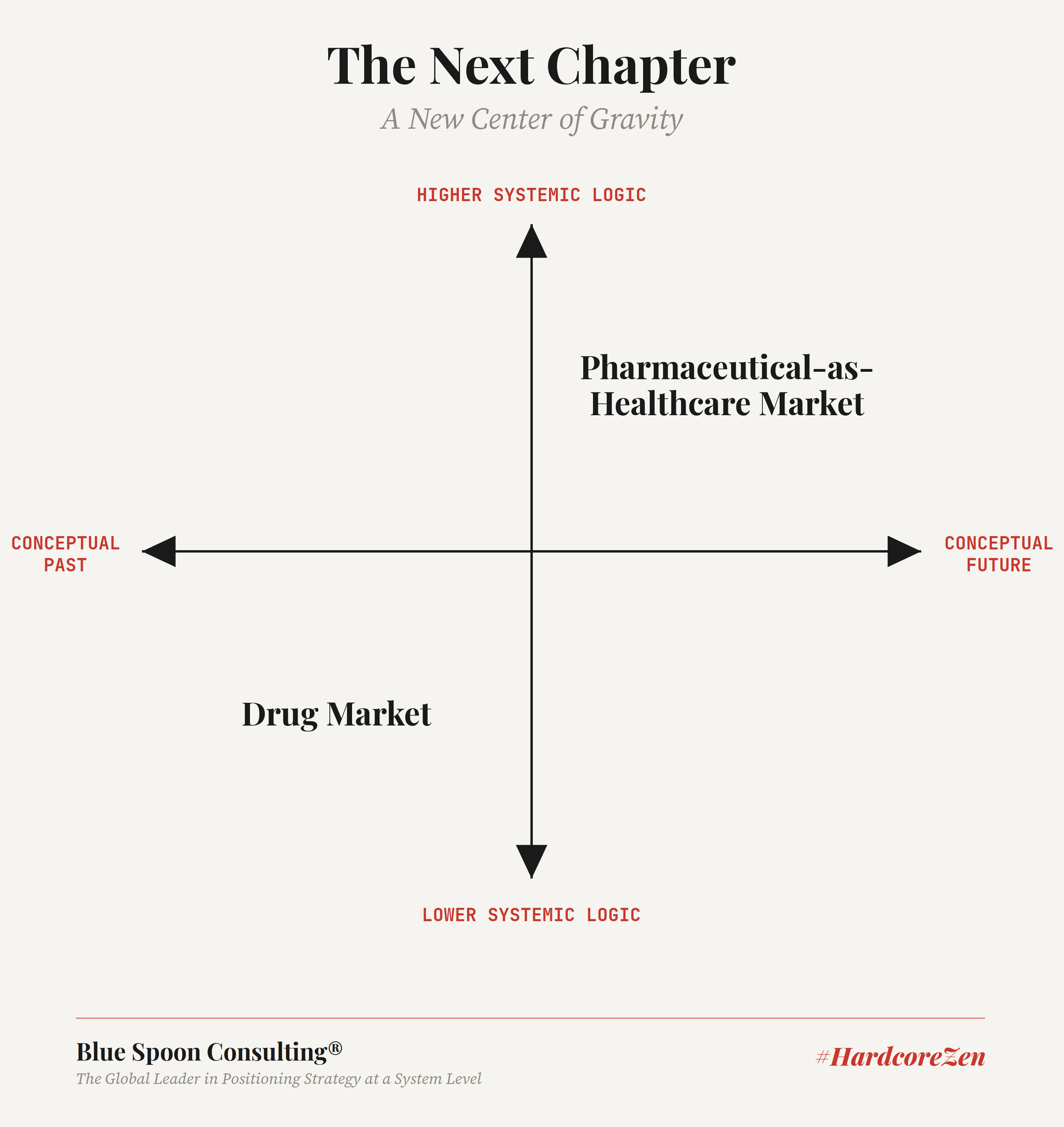
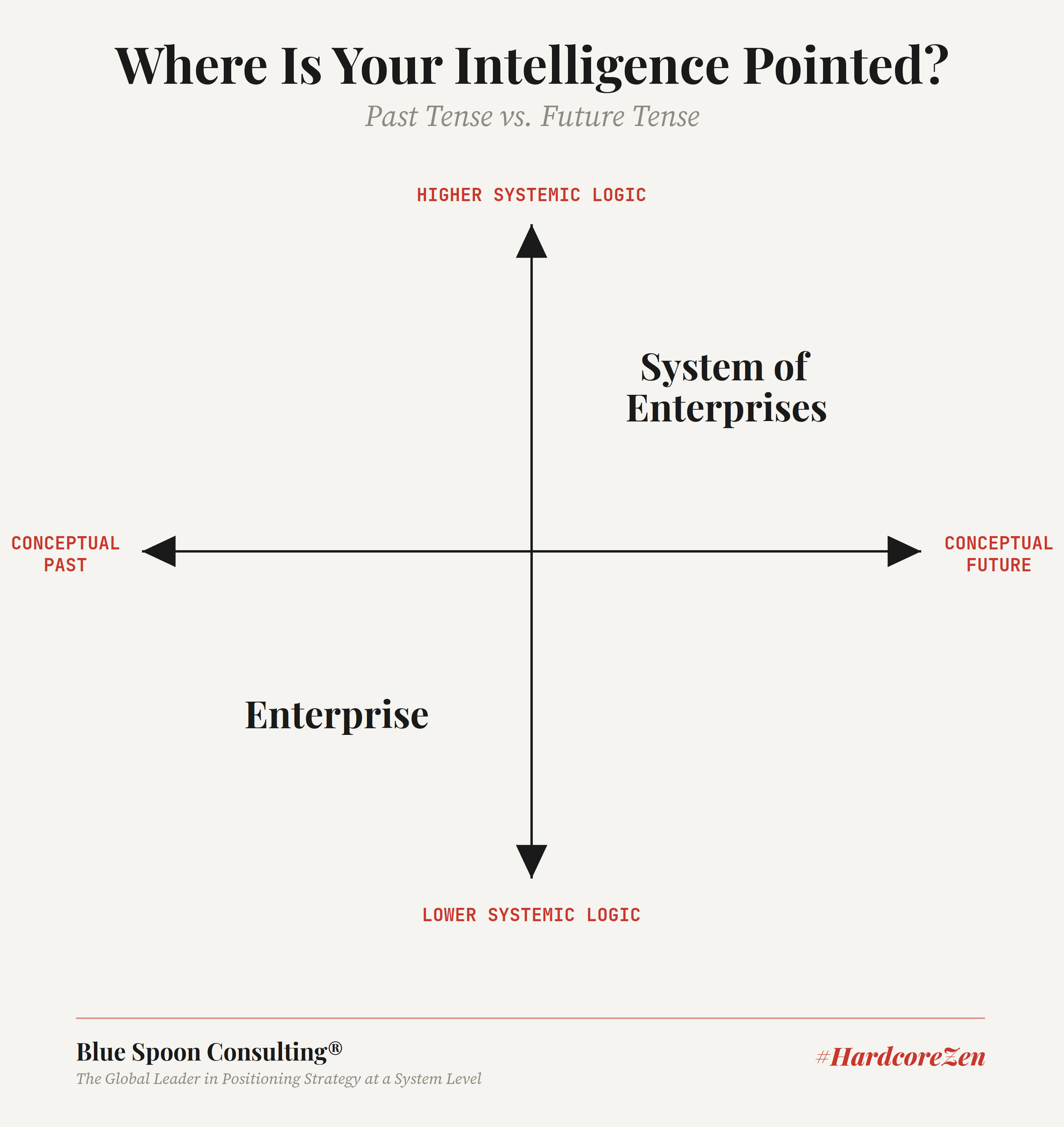
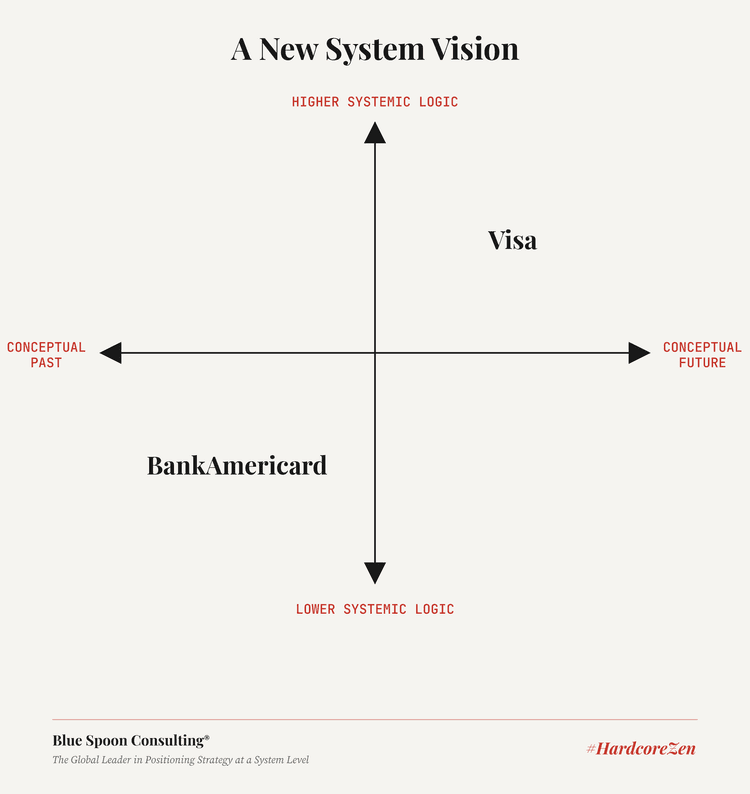
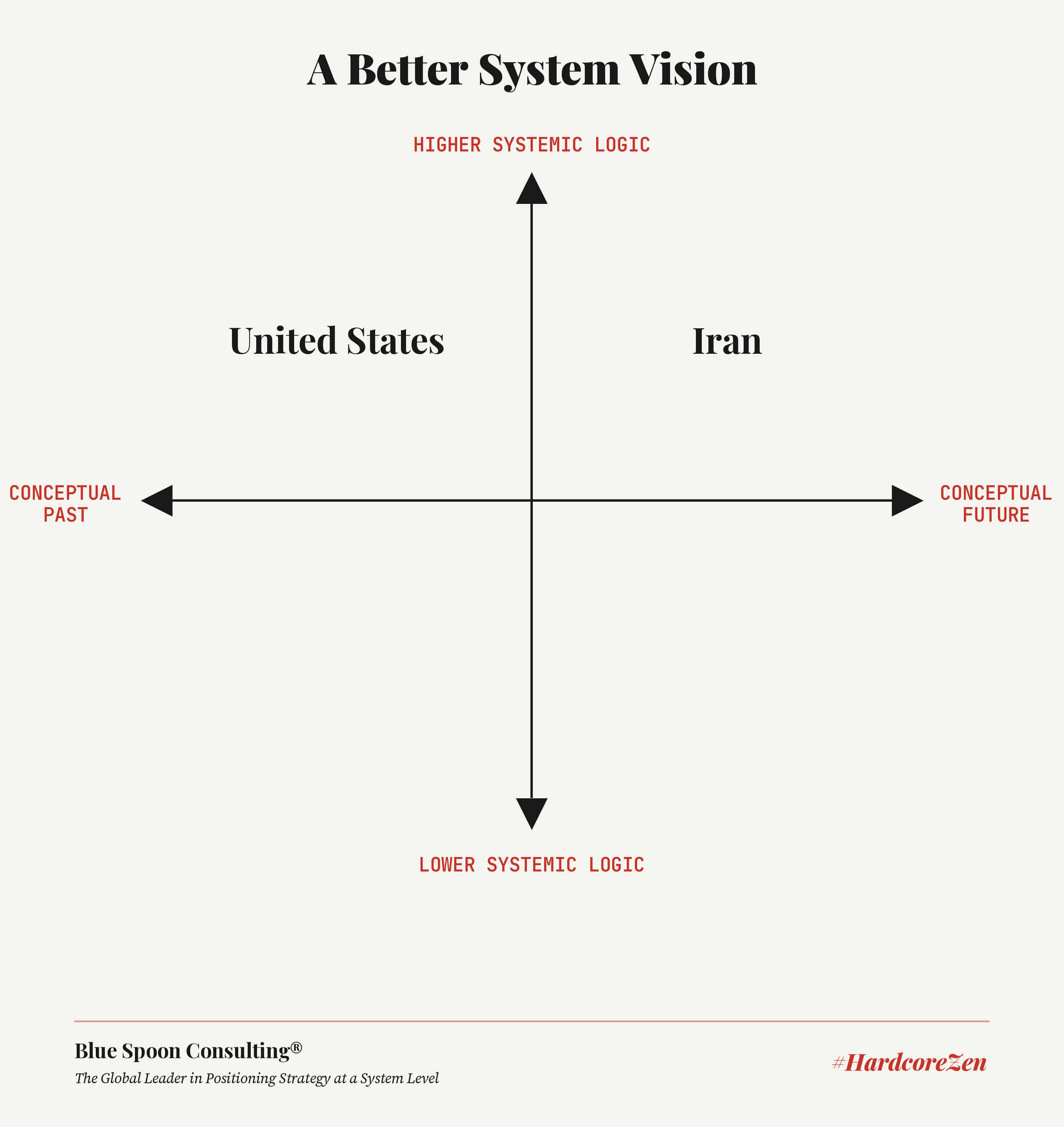
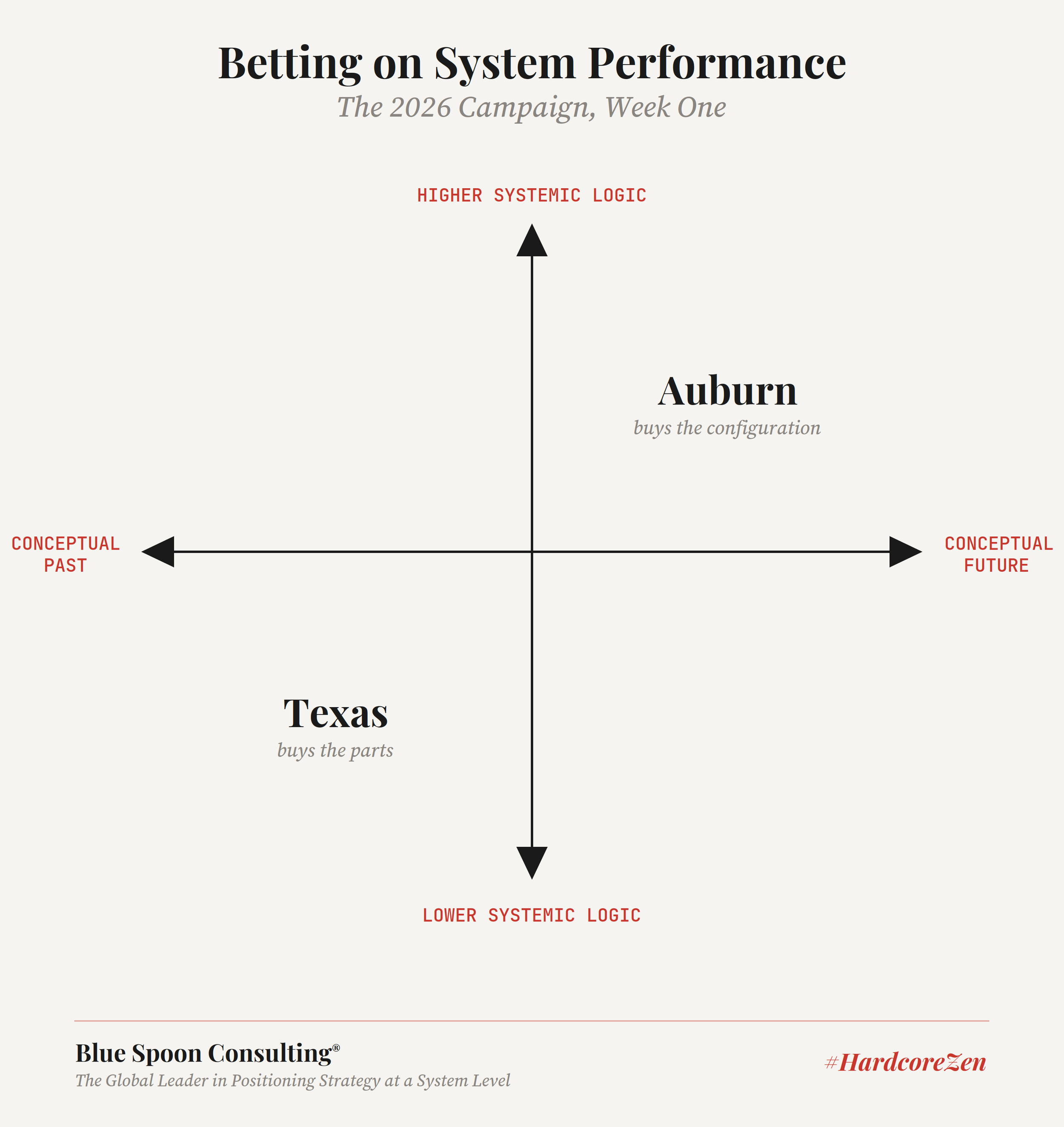
The x-axis is time — not calendar time, but conceptual time. How far forward or backward is your strategic frame? The y-axis is systemic logic — are you optimizing inside the current system, or designing the next one?
Modern strategy lives in the upper right: high systemic logic, conceptual future. That's where Amazon operates. That's where the top of the Burning Man Index lives.
Remnant Context lives in the lower left: low systemic logic, conceptual past. That's where institutions go to hold meetings about the meetings they had about the problem they identified three years ago.
Breaking Syntax
Chaos is the new standard. This is not a temporary disturbance; it is a structural condition. There are no remnant contexts to retreat into, no inherited scripts that still hold.
Competition now is less a contest of ideas than of narrative gravity — the ability to seize attention, impose coherence, and make your vision of reality the one others must navigate.
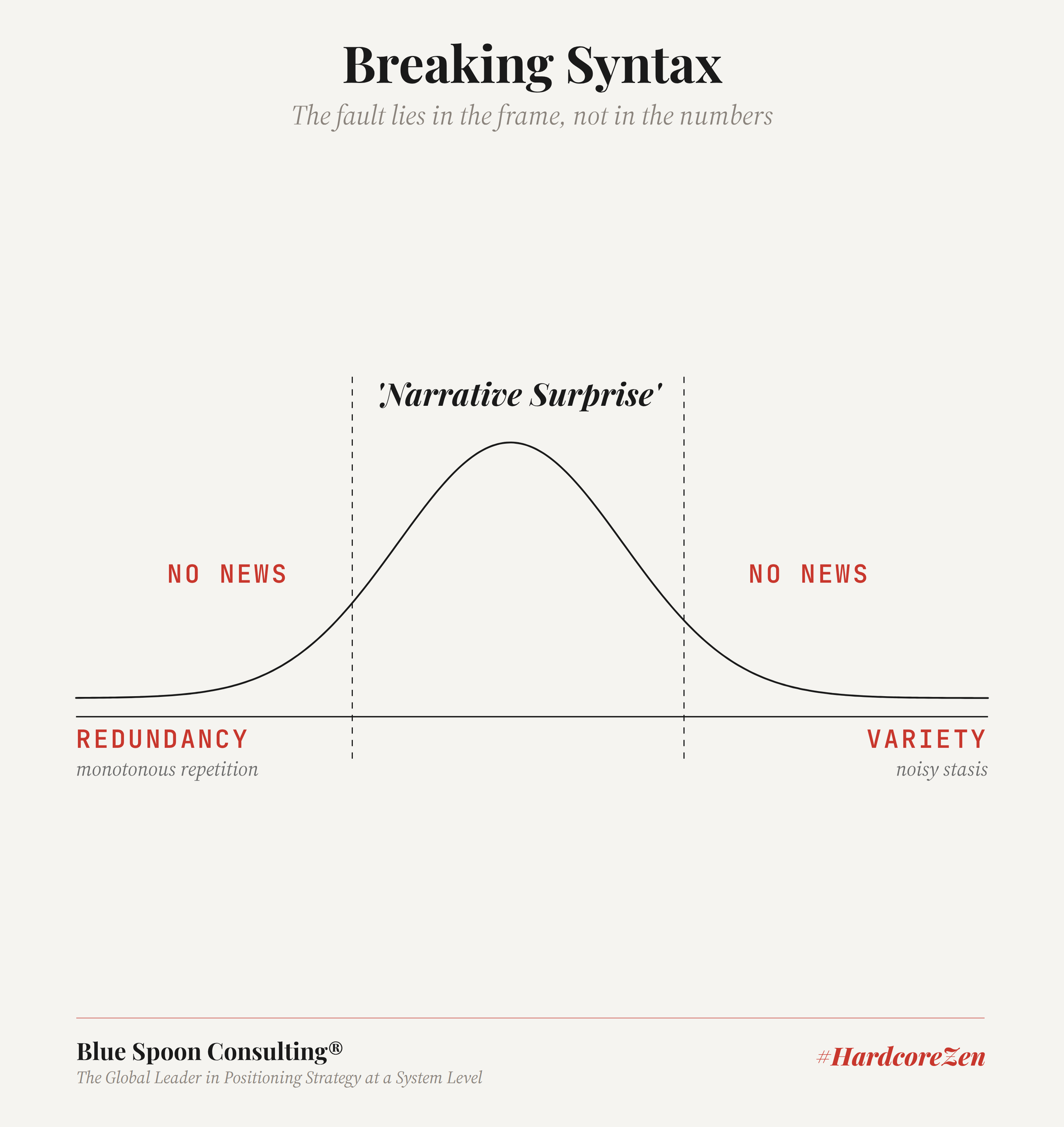
Most institutional narratives live on either side of the curve — in the flatlands where nobody is listening. On the left: redundancy, monotonous repetition, the same quarterly earnings story told the same way to the same people. On the right: variety, noisy stasis, so much signal that nothing registers.
The peak is Narrative Surprise — the narrow band where a story breaks through because it reframes what the audience thought they already understood. Not louder. Stranger.
When You Say "Drug Market"
Many management teams miss or misunderstand the conjuring part of market innovation: markets are less 'out there' in the ether somewhere, but constructed deliberately, sparked by different words to think different thoughts, to lead with unique industry narratives.
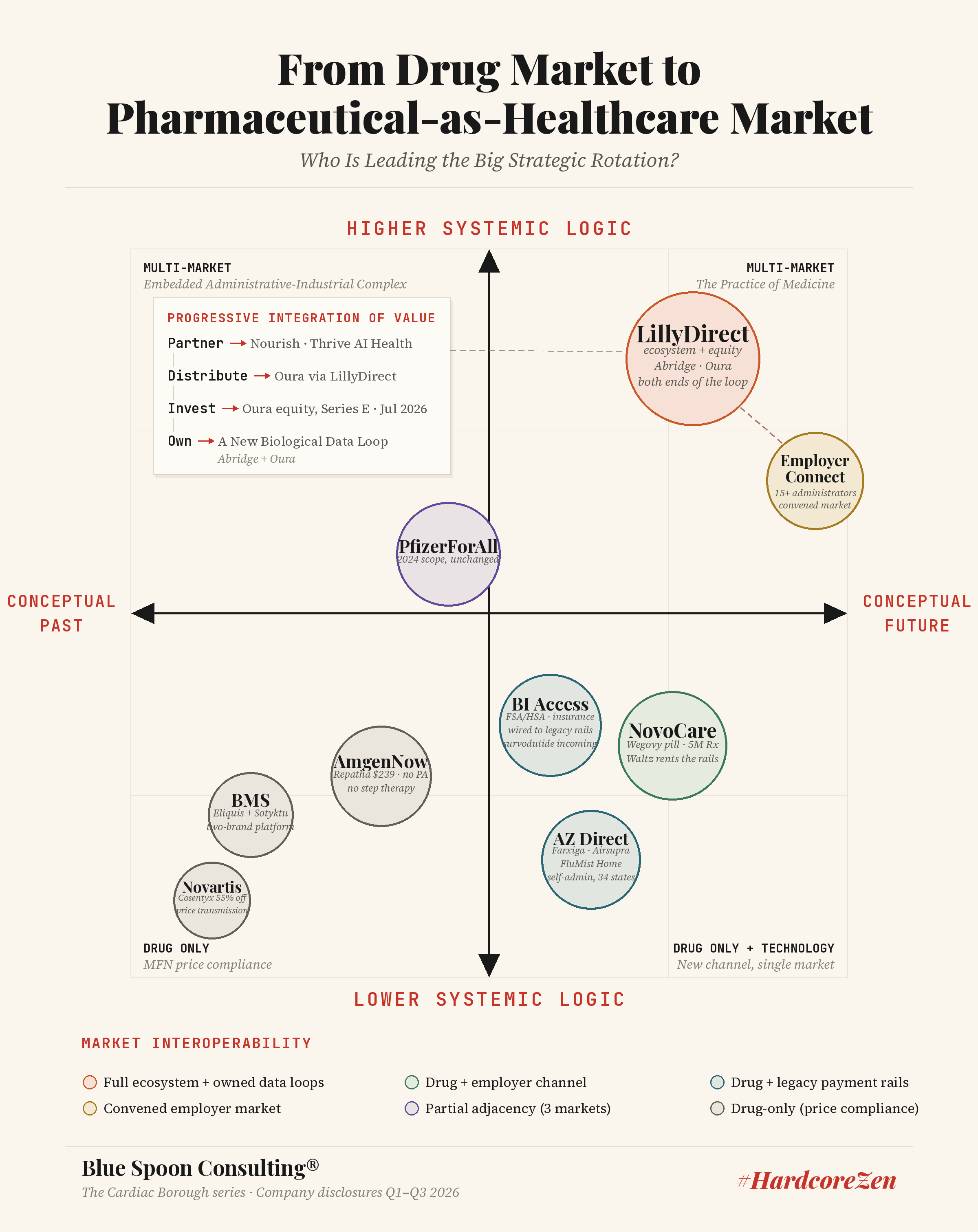
The pharmaceutical industry still calls itself a "Drug Market." That's not a description. It's a signal. It tells you where the industry is positioned on the quadrant — lower left. Conceptual past. Lower systemic logic.
The big strategic rotation is from Drug Market to Pharmaceutical-as-Healthcare Market — upper right. Higher systemic logic. Conceptual future. This isn't a rebrand. It's a complete inversion of the competitive unit. The drug is no longer the product. The system of care surrounding the drug is the product. The molecule is a component. The ecosystem is the strategy.
Have You Reached Peak Brand?
Change comes in three wavelengths. There are changes to the game, changes in the rules of the game, and changes in how the rules are changed. The world is flailing to find Strategic Fit to the latter.
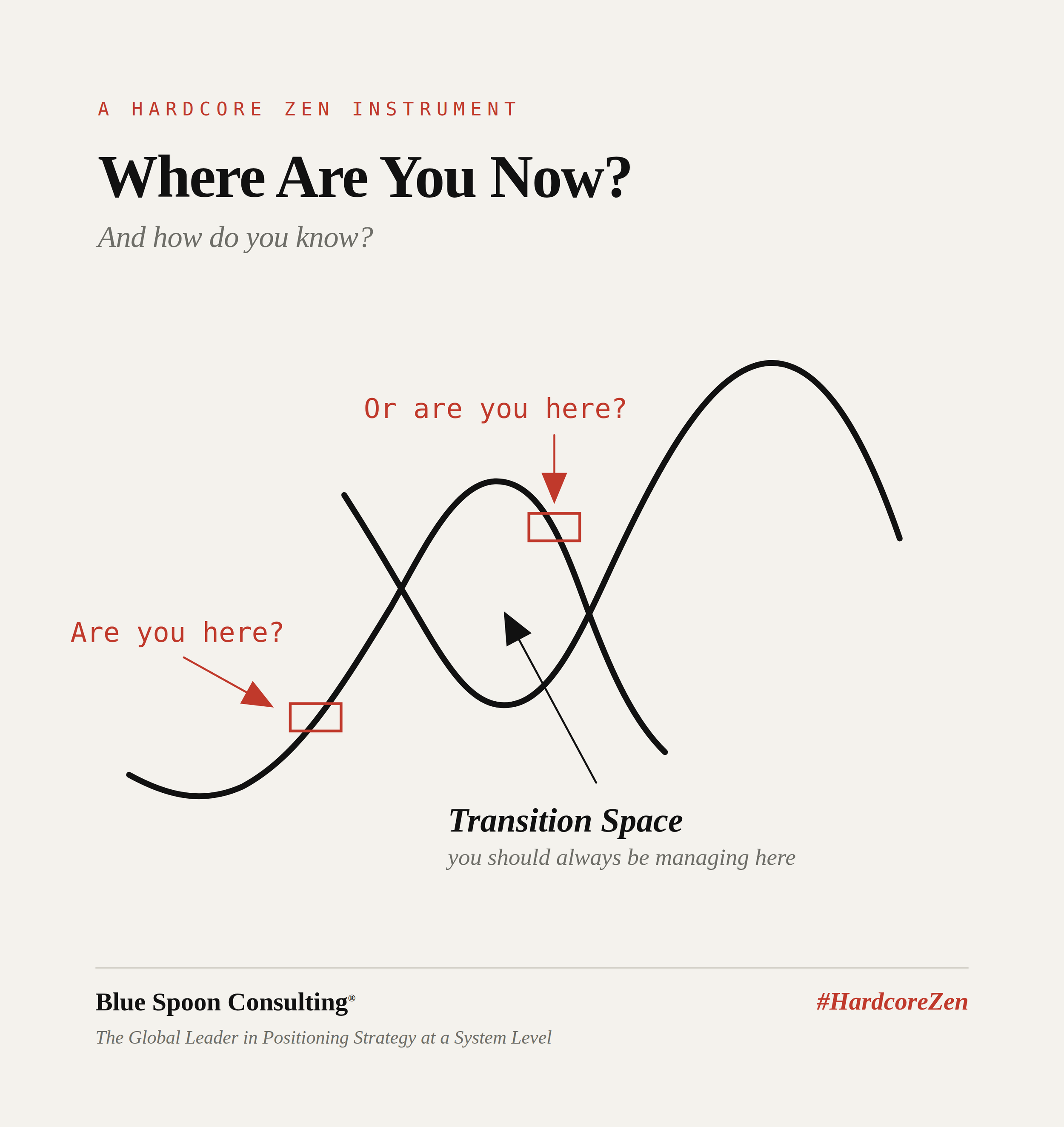
Hardcore Zen asks a different question: Are you here? — riding the current curve, mistaking momentum for strategy. Or are you here? — already inside the transition space where the old curve crosses the new one.
Transition Space is where you should always be. It's the intersection point — messy, ambiguous, disorienting — where the declining system and the emerging system briefly overlap. Most leaders avoid it because it feels like failure. It's not. It's the only place where the next curve is accessible.
How to Escape a Doom Loop
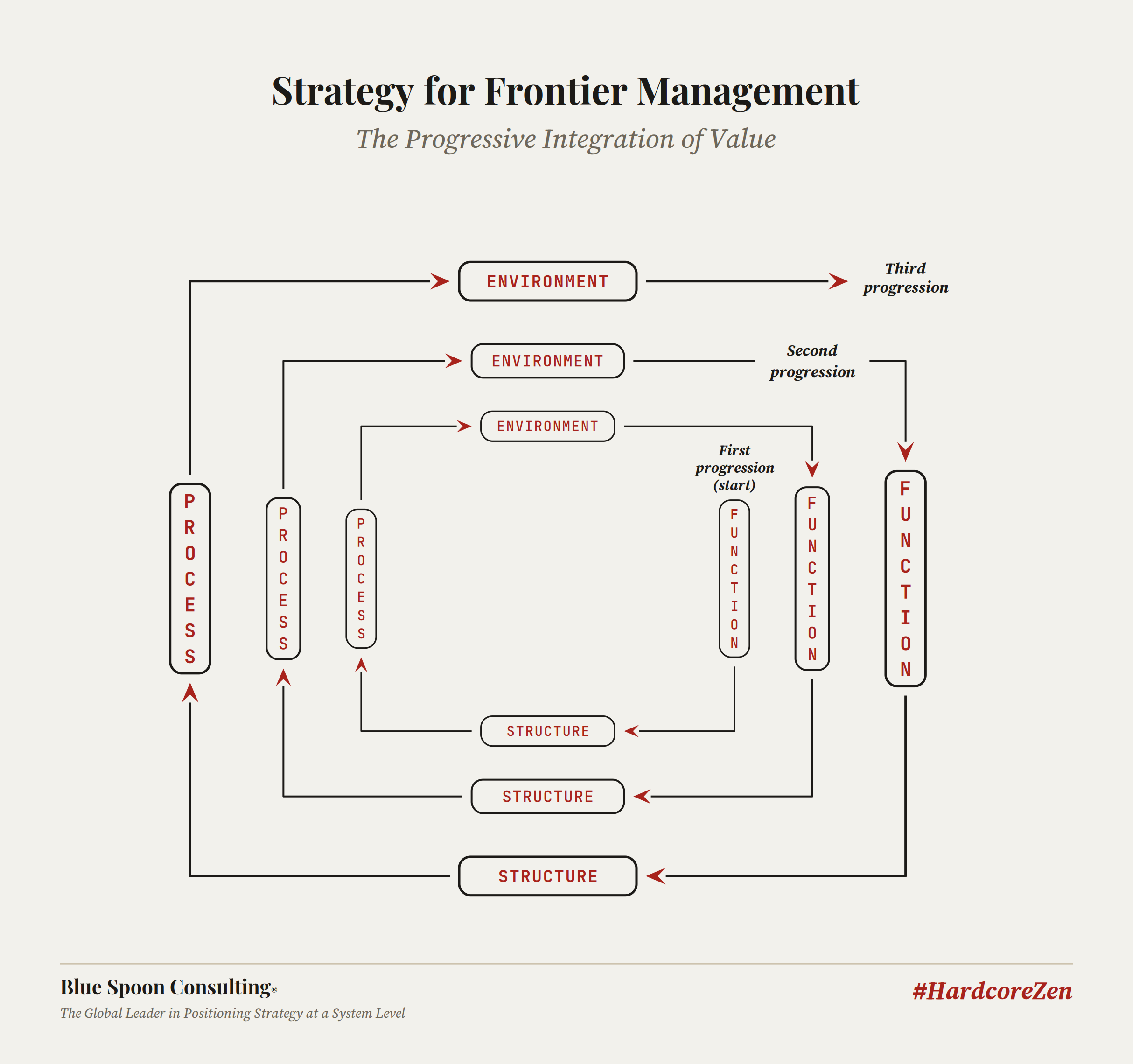
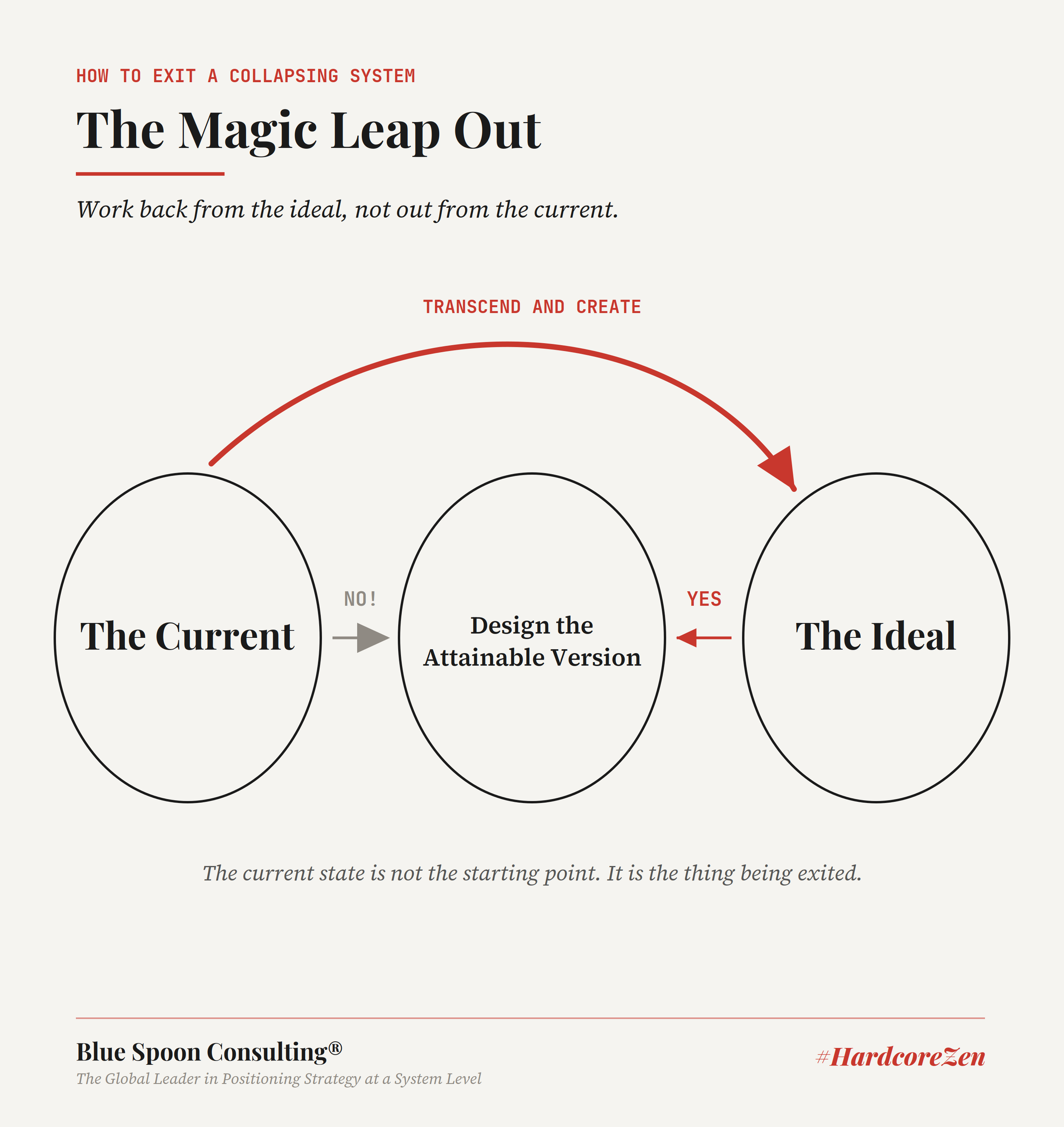
Exit from a collapsing system is not about moral clarity or managerial discipline. It's about structural re-imagination: the deliberate design of a new ecosystem that aligns value flows, absorbs feedback, and produces self-generating markets.
You can't imagine your way to new strategy when your compensation, your board, your shareholder expectations, and your entire operational vocabulary are still encoded in the Standard Model.
Hardcore Zen inverts the sequence. Start from The Ideal — the system as it should exist if you were designing it from scratch, unconstrained by the architecture you inherited. Then work backward to design the attainable version of that ideal.
The Missing Feedback Loop
Most of the infinitely-expanding galaxy of technology services vendors are struggling with the strategic physics, pitching LLMs that look and think like a rehash — if for no other reason than they're based on internet data that has already been scraped, cleaned, retrained, and resold over and over again to death.
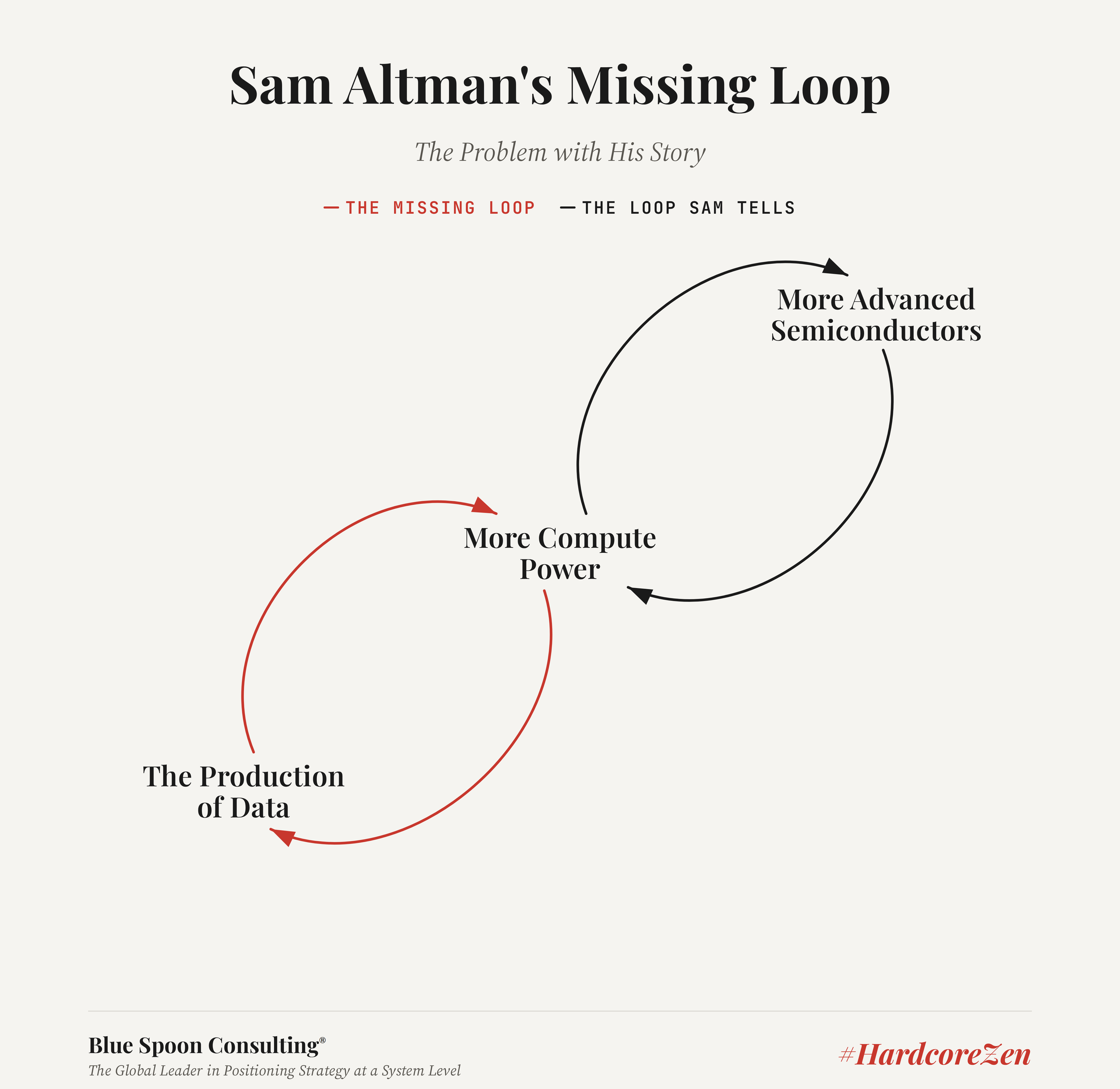
At a system level, Sam Altman has a Missing Loop Problem. His narrative runs a tight circuit: more advanced semiconductors produce more compute power, and more compute power produces better AI. The black loop is self-reinforcing. It doesn't need the outside world. It just needs more of itself.
But the red arc — the missing feedback loop — connects to the production of health data. Messy, fragmented, regulated, embedded in institutions that don't share well. It doesn't scale like silicon. It doesn't obey Moore's Law.
Shifting the 'Center-of-Gravity'
The pharmaceutical industry's center-of-gravity problem is simple to draw and almost impossible to solve from within. "Drug Power" dominates the frame — the molecule is the product, the pipeline is the strategy, the patent is the moat. "Everything Else" — the care systems, the data architectures, the economic networks that actually determine health outcomes — is compressed into a sliver.
An ecosystem-centered strategy inverts the ratio. "The Power of Everything Else" becomes the frame. The drug doesn't disappear — it becomes a component inside a larger economic system designed to produce health, not just prescriptions. This is the Big Strategic Rotation — from drug market to pharmaceutical-as-healthcare market.
Schedule a Hardcore Zen Whiteboard
A 90-minute whiteboard built for leaders navigating structural change. We apply Hardcore Zen to your business — and surface the large pools of value and opportunity it creates when the standard playbook stops working.