

How to Manufacture a Market
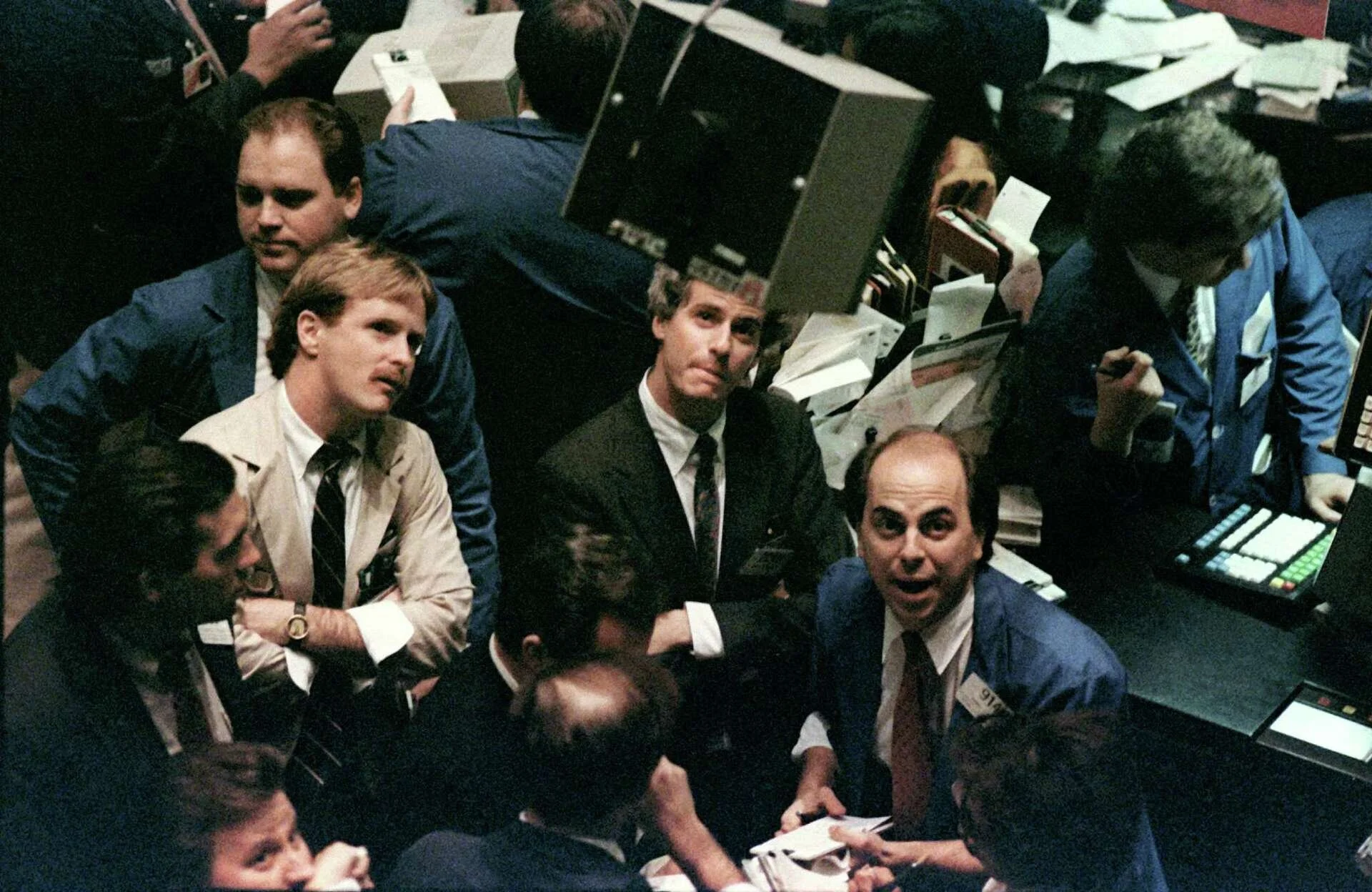
The New York Stock Exchange lists roughly two thousand companies worth some forty trillion dollars. It grew out of two sentences.
In May of 1792, after two months of negotiation, twenty-four stockbrokers and merchants came together on Wall Street and signed the Buttonwood Agreement, a document that ran to sixty-seven words of obligation. They agreed to “give preference to each other” in their trading of public stocks, and to charge a commission of no less than a quarter of one percent. They fixed a minimum and left everything else unwritten.
What made the competitors align and sign was that they were desperately seeking an exit strategy from a collapsing system.
In Crisis Chronicles: Central Bank Crisis Management during Wall Street’s First Crash, the Federal Reserve Bank of New York tells the story. William Duer had been Assistant Secretary of the Treasury under Alexander Hamilton and had left the post. Once out, he borrowed from everyone he could reach — friends, family, widows, anyone who believed a man that close to Hamilton could not be wrong — to corner the market in federal and bank paper. When it turned it turned fast. Paper that was money in the morning was wastepaper by the afternoon, men who had been rich at breakfast were ruined by dinner. Duer went into debtors’ prison and never came out of it alive.
What that left on Wall Street was a market in securities where no one’s word was worth anything. Trades went unhonored. Prices meant nothing. Every broker in the city was paying for the absence of rules that none of them could impose alone.
A founding agreement is generative in proportion to what it declines to decide. Vagueness is not necessarily a defect. It is an instrument, and it can be handled well or badly (see the memorandum of understanding between the United States and Iran). It is a constitution rivals write above the competition between them. Once set in motion, what comes into being is closer to an ecology than an arrangement: a thing that is grown rather than assembled, a market that self-generates.
What the Buttonwood Agreement did, it did in the space in between the words, in the things left unsaid — which is why it can read as trivial now, to anyone expecting a founding document to look like a strategy. It invented a living system that compounds.
The real innovation was not the securities market, it was the rules under which a flow of markets could come into existence. The listings, the clearing houses, the institutions, the industries, the technologies: two obligations specified in advance, all of it emergent afterward.
The Buttonwood Agreement gave the brokers a way to govern the commons. And a form of it is how Visa started, nearly 180 years later.

Exit from a Collapsing System
By 1968 BankAmericard was having its own version of system collapse. Bank of America had licensed its card out, and a banker at one of the licensees later summarized the whole of the strategy as a form of carpet bombing: “mass issue hundreds of thousands of unsolicited cards, sign every merchant in sight.” Thousands of banks were issuing under one shared name, unable to settle with each other, and nobody had the standing to write rules they would all obey.
The answer was not a technology.
It was a new network, built from scratch and signed into being two years later, because an economic system that has already hardened cannot be fixed from inside itself — the incentives holding it in place are the same ones that would have to be repealed. Look no further than the Pentagon’s acquisition process, the US healthcare system, the EU’s Common Agricultural Policy, the National Health Service, or the pharmaceutical rebate to understand this truism.
Which is why the 1970 charter founding Visa did what it did. The competing banks owned it, with ownership that could not be sold, and the rules bound Bank of America exactly as they bound the smallest member. The party with the most power was the one whose power got constrained, and it agreed to that because the alternative was watching the business it created fail.
That charter brought the modern payment rails into being, now worth something on the order of $670 billion to Visa. Mastercard — the rival association another set of competing banks built to answer it, organized on the same Buttonwood principle, demutualized the same way — is worth another half trillion. American Express launched its own card in 1958, the same year as BankAmericard, and never wrote a founding agreement at all: no members, no shared ownership, nobody’s rules but its own. It is worth $231 billion.
One company kept control and two gave it away, and the ones that gave it away are worth five times more.
Every good system reaches its end. Sometimes it drifts there, degrading and eroding over time. Sometimes it falls in on itself in the manner that Hemingway described bankruptcy: gradually, then suddenly. But they all fail at some point. It is a law of nature. The quarter-percent floor those twenty-four men wrote outlived its purpose by about a century. It became a cartel price, and it took the SEC to end it in 1975.
The rules that made a market possible become the rules that hold it in place, the participants who were saved by them become their guardians, and what began as an opening hardens into an immovable object.
Then the object gets defended, as a matter of financial obligation to the past, as a form of Standard Model strategy-making, and as a symptom of leadership unable to ‘leap out’ of the system of which it is a part. They try to squeeze more life out of it instead. Lacking that skill, they stay stuck with operational changes. They work a ghost framework, like the SWOT that sees a rival out there somewhere, doing something you can list.
To wit: Visa just cut 7 percent of its workforce.
It also spent July asking Washington for a 25 percent tariff on Brazilian goods because Brazil built Pix, a public payment rail that works as a common good. Mastercard laid off about 4 percent of its own workforce earlier this year, and on August 3 closed a $1.8 billion purchase of a stablecoin infrastructure company, its largest bet yet on settlement rails it does not own. Stripe took the same position two years ago.
Visa and Mastercard have become commodity inputs to somebody else’s product, in the same way Amazon turned FedEx and UPS into features of its own logistics.
With Stripe owning the checkout layer merchants actually install, and Pix moving more transactions than cards inside Brazil, Visa and Mastercard are now companies in need of an exit strategy from the economic system they created. Which is the strategy problem facing the big PBMs, whose rebate architecture was the thing that made them indispensable and is now the thing employers are routing around.
It is also, as of two weeks ago, the problem facing the New York Stock Exchange. The Texas Stock Exchange went fully live on July 31, the first new major exchange in the United States in decades, backed by BlackRock, Goldman Sachs, Citadel and Schwab, with corporate listings due in the autumn and IPOs next year. The NYSE’s answer was to open a branch in Dallas.
Which leaves the question facing every leader managing to the next quarter’s readout while knowing the whole thing is operating in failure mode. How do you defend a failing system and invent a new one at the same time?

Narrative, with Structural Intent
A market is not something you discover. It is something you write into being.
A founding agreement is narrative with structural intent. It sparks a new economic system, intentionally. It transcends the transactions themselves and is positioned one level higher, at the constitution written above the competition.
It starts with one sentence.
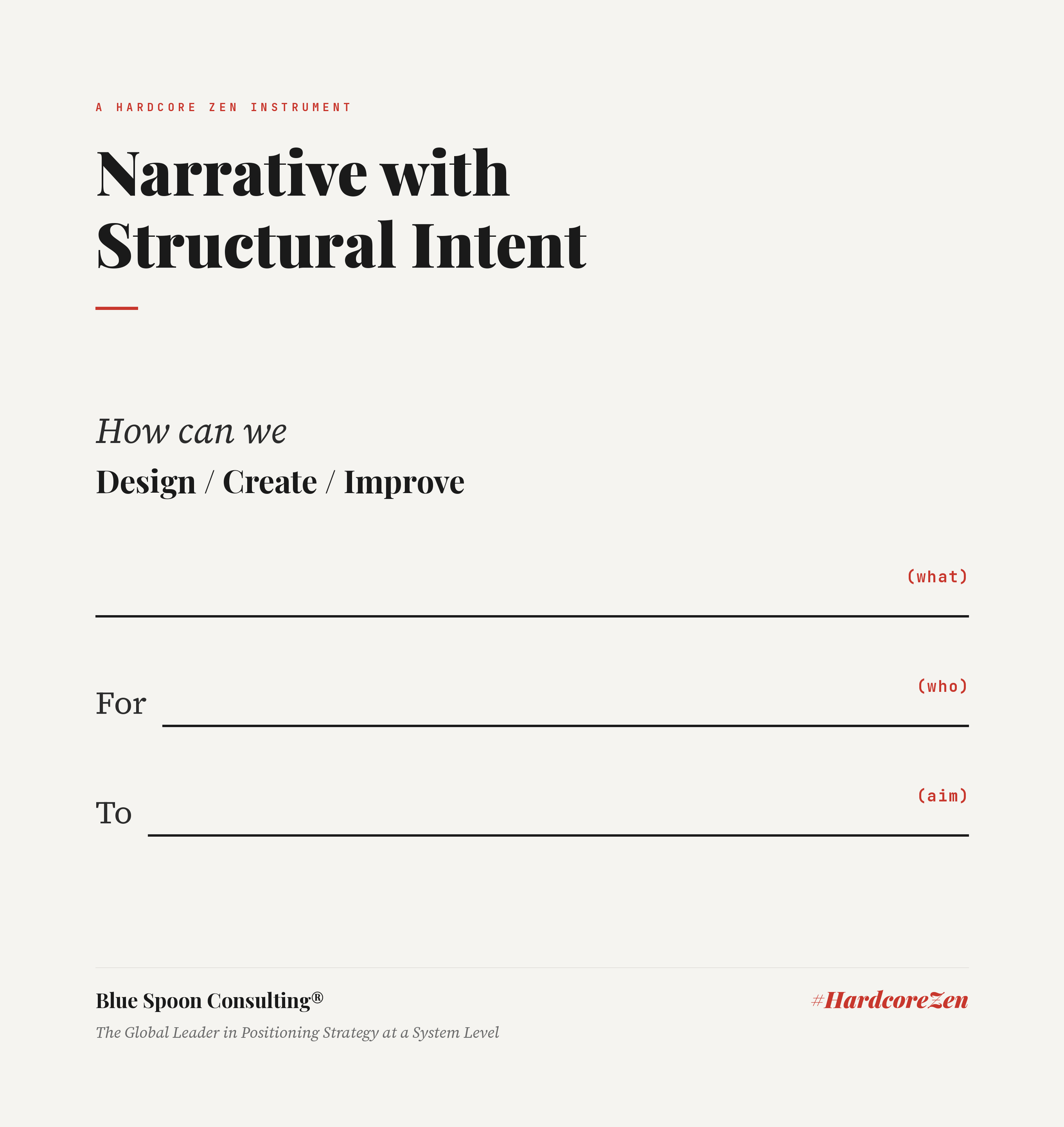
Inventing a new economic system has assembly rules — the same conditions, the same order of approach that sparked the New York Stock Exchange in 1792 and Visa 178 years later — which makes the writing the closest thing there is to a template-driven process for new growth: a few pages of obligation, and a new system of markets on the other side of them.
Blue Spoon has now published the Buttonwood Designer™, an interactive tool for drafting founding agreements. It is built for deal-making at a system level, where the problem is N-sided rather than two-sided, infinitely recursive and scale-free, potentially involving more parties than any single deal structure accounts for. The goal is not terms between parties. It is manufacturing a new economic system.
Founding agreements are among the least-tooled instruments in strategy. There are tools for mapping an ecosystem that assume an ecosystem already exists and only needs charting. The Buttonwood Designer drafts the agreement that founds one (or even a portfolio of them). M&A moves ownership. Alliances move capability. Investment banks move capital. None of the three founds a market.
The Designer applies and adapts published research on complexity theory and network-centric policy design. It maps the potential participants in a new system vision as a network rather than a list, ranks them by positional value — who can bind whom, through whom, at what remove — and sequences the convening accordingly, because the order in which parties are approached determines whether the agreement is signable at all.
What comes out is a founding agreement: the parties, the obligations, the ownership form, the layer held in common, the sequence.
It lives on the Blue Spoon site, at Ecosystems. Available for download, no personal data required. It comes loaded with a worked case for the production of cardiometabolic health, which is an example and not the scope — the Buttonwood Designer can be applied to reshaping markets in defense procurement, financial services, technology services, or education. The same instrument works on policy innovation, and even on geopolitics, wherever the parties are rivals and the value sits above the rivalry.
This first release is rough clay, a reference point from which to reorient thinking about possibility. The export is a draft, not a document anyone should sign. The ranking will be wrong, which is what every good strategy admits at the start. You are welcome to criticize or correct.
The Buttonwood Designer is named for the tree where those first stock brokers traded in fair weather, and for what they understood that most strategy departments today do not: that the way out of a collapsing system is to invent a new one.

Solving for Value Alignment
The future does not belong to whoever holds the biggest position, or the deepest balance sheet, or the most defensible toll, or the strongest technical capability. It belongs to whoever is most skilled at jointly articulating, selling, and sustaining a better system vision, a narrative in which everyone can see themselves as a character in the story.
And that narrative is what gets written into an agreement in which rivals accept a constraint above their competition, because new value sits on the other side of it: value that exists and emerges only at the level of a whole, that thinks beyond the next quarter.
A modern strategy starts by positioning a shared future. By parties who had no reason to articulate anything together, who start owning the conditions under which markets are produced.
/ jgs
John G. Singer is the founder and Executive Director of Blue Spoon, the global leader in positioning strategy at a system level.
Blue Spoon runs the Working Whiteboard: one session, one framework, one chart — your market as a system, objectives positioned strategically instead of operationally, original storylines of value. Inquire.