

When Your Adversary is a Complex Adaptive System
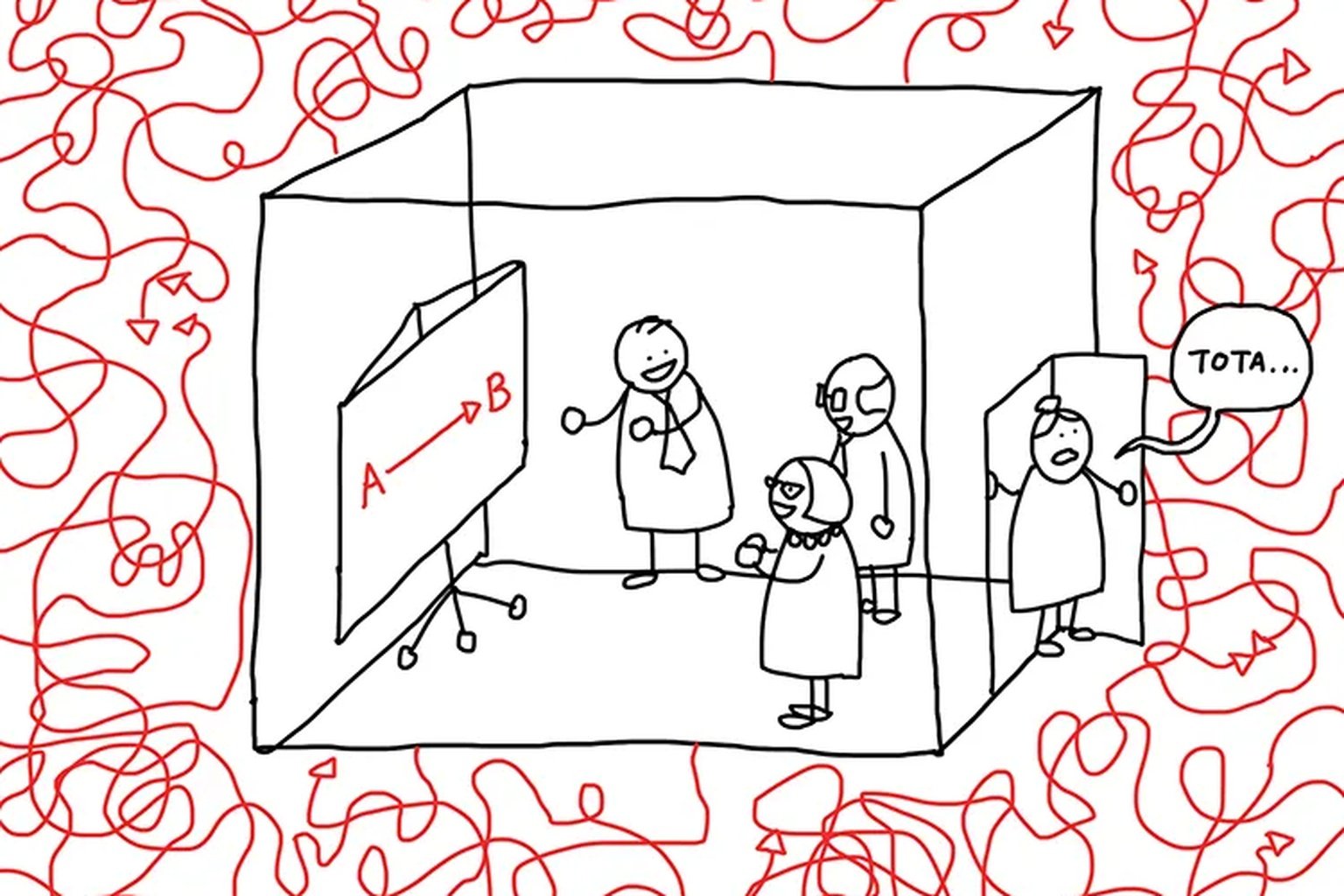
Every strategy contains an unwritten specification of what will hold still while the plan executes.
The dependent clause is rarely stated, because stating it would invite argument, and because the people writing (and selling) the plan have usually mistaken it for the ground rather than what it is, a bet, a theory. The sense of mastery is the product, expressed in the deck and the data, producing an anesthetic calm that settles over the table because “the crooked timber of humanity” has been rendered straight in the PowerPoint.
The nonlinear has been made linear, and a room of grown adults with mortgages can stop worrying.
Except that the ability to predict, and therefore to plan, has been so degraded by complexity that rigidity is an existential threat. Reality is too complex to actually know, so we pretend, delivering a performance of competence until the layoffs and the reorgs kick in.
And it is that self-confidence that delivers strategic failure at a high rate. Corporate earnings guidance lands as forecast about thirty percent of the time — nearly nine in ten of the executives issuing it were at least seventy percent sure they would hit it. The people who make these forecasts know it, too. Marguerite Bérard, a year into running ABN AMRO, told a summit of chief executives in London this June that a five-year plan can now be obsolete in five days. The polling-and-punditry industry has misread Donald Trump in three consecutive presidential elections, because the models keep assuming the people who turned out last time will be the people who turn out this time. The war in Iran was going to take a few weeks.
A dynamic environment requires a dynamic entity. It sounds like a tautology until you count how few organizations are built that way, and how many are built for excellence at holding a single shape.
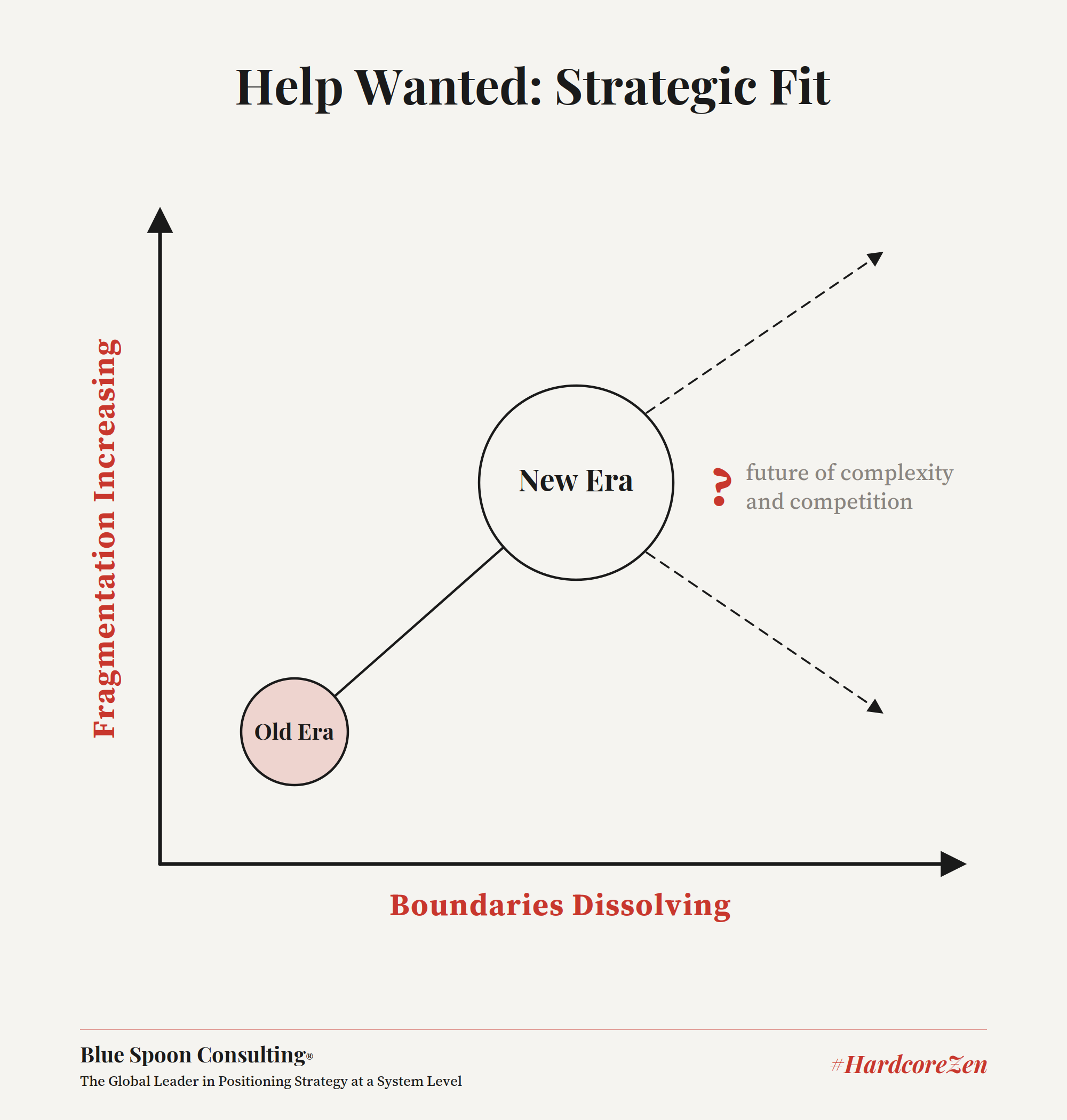
Adaptability and evolvability, being more organic and ecological, are not aspirations or achievements but requirements. This is the discipline of frontier management, and its first move is to stop treating agility as a virtue and start treating it as a specification.
Albert Bourla, Pfizer’s chief executive, described the choice last week, in an essay about how his company thinks about itself. Transformation, he argues, means changing the organizational form, almost becoming a new species, and enabling the edge to self-organize and make decisions. IBM found the other end of it — $69 billion of market value gone in a single day in July, after a profit warning that came down to customers moving their money from software to AI hardware faster than the company could move itself.
Pfizer is an incumbent changing form before anything forces it. IBM is what it costs to be moved instead of moving.
Killer Mayhem
American politics keeps its own version of this ledger.
Abdul El-Sayed took Michigan’s Democratic Senate primary, a progressive carried by the Democratic Socialists of America in a swing state that cannot be lost. The reaction from the Standard Model Democratic Party was not analysis. It was panic at the disco. Jonathan Cowan, who runs Third Way, the Washington think tank that has served as the institutional home of moderate Democrats for two decades, called the movement a mortal danger and said they are “preparing for the next war that is coming.”
It is a house divided battling its house divided. We have seen the enemy, and the enemy is us.
Around the time American bombs began falling on Tehran, Iran’s foreign minister posted a description of what his country had built and why. For two decades Iran had watched the United States lose wars on both of its borders — Afghanistan to the east, Iraq to the west — and had drawn its conclusions. Command was pushed outward and downward until there was no center left to remove. “Bombings in our capital have no impact on our ability to conduct war.” The doctrine even has a name. Decentralized mosaic defense. It is management innovation, complexity science and military strategy at once, which is exactly why it is dangerous, and why no single institution owns the failure to teach it. Oxford, the Santa Fe Institute, the Army War College: it belongs in all three, and where it is studied at all it is studied as a threat rather than as a method.
Minimum objectives set centrally, execution pushed to whoever is holding the launcher, no node whose removal collapses the whole. Frontier management looks like this. Not the ability to hold a position, but the ability to keep operating without one.
The DSA has no headquarters to research, no chairman to discredit, no strategy memo to leak, no one authorized to surrender. What it has is 120,000 members (a number that has grown more than twentyfold in a decade) who decide most things by vote, no donors to answer to and no consultant bench to pay. The Democratic Party, like the entire software-as-a-service industry, is stuck in the old economic model. It sells access. The DSA confers membership. Its product is not a candidate but something closer to generative — a method for making them. The loop compounds: volunteers produce wins, wins recruit volunteers, and none of it goes dark when the ads come down.
Third Way has budgeted fifteen million dollars through 2028 on opposition research and messaging, to go to war against the DSA. The problem being that you cannot run opposition research against a self-organizing system. You also cannot bomb one into submission.
The Democratic Party is selling seats; the DSA is running a generator. That is precisely the exposure IBM discovered — you cannot defend a per-unit business against something that produces the units — and it means the fifteen million is buying research on outputs while the thing that matters is the model producing them.
Strategy is flow, not end state.
Iran Has Punk Rock Nature
There are as many theories about why punk rock came to be as there are punk-rock progenitors, but like all good revolutions, punk was born out of deep discontent with the times. Anger was its animating energy, and its diffusion was propelled by technical accessibility and entrepreneurship: it was simple and easy to pull off by pretty much anyone. In January 1977 the English fanzine Sideburns published a now-famous illustration of three chords, captioned “This is a chord, this is another, this is a third. Now form a band.”
Or form a swarm.
The Shahed-136 — Iran’s one-way attack drone — is balsa wood and stamped metal, with a reverse-engineered two-stroke engine of the kind that moves a moped. Twenty thousand dollars a copy, assembled in days from components no export-control regime can reach (sanctions cannot touch a weapon built from automotive GPS receivers and hobby flight controllers, because those are civilian goods sold everywhere). The Patriot interceptor sent up to kill it costs about four million and takes three years to build. Somewhere a lieutenant is authorized to spend it shooting down a lawnmower engine with wings; he will do it again nine minutes later, and the arithmetic is Iran’s whole plan.
The animating energy for Iran is not in dispute either. Four decades of cultivated hatred for the United States, which costs nothing to manufacture, does not depreciate, and requires no supply chain.
A reactionary ‘had-it-up-to-here’ fury is what sparked punk rock. It is what made a socialist mayor of the capital of capitalism. It is what fills a DSA meeting on a Tuesday night. Anthony Scaramucci — briefly Donald Trump’s communications director, nobody’s idea of a socialist — wrote last month that when inequality gets this extreme, history is very clear about what happens next: people show up with pitchforks.
Perceived unfairness at scale is the most combustible material in politics, and it is the thing that eventually produces heads on stakes.
Punk was an operating philosophy that undermined the integrity of the culture in which it was introduced. It altered what was meant by a new industry model, changing those deeply embedded habits of thought which give a system its sense of self, the framework it uses to describe the natural order of things.
Punk, like the DSA and Iran (and even Trump), is disruptive at a system level. Nothing sacred. Boundaries meaningless. Definitions subject to change.
Completely different wattage.
How to Beat a System
Third Way is preparing to fight an insurgency, and it will lose in the way the United States has lost against Iran. What it faces is an adversary that is charged by a completely different wattage, which is not something opposition research reaches, or precision guided munitions can destroy, because there is nothing illegitimate to find and no single target to kill.
The adversary is energy, federated.
A complex adaptive system adapts, which is the true nature of modern strategy, and it is what the unwritten specification at the bottom of every funded plan refuses to allow for.
Heinz Pagels, the physicist who wrote The Dreams of Reason (Simon & Schuster, 1988), left behind a prediction about who would inherit the next century: “I am convinced that the nations and people who master the new sciences of complexity will become the economic, cultural, and political superpowers of the next century.”
More to the point, the way to beat a system is to excel in it.
/ jgs
John G. Singer is the founder and Executive Director of Blue Spoon, the global leader in positioning strategy at a system level.
Blue Spoon runs the Working Whiteboard: one session, one chart — your market as a system, objectives positioned strategically instead of operationally, original storylines of value. Inquire.