


The Cardiac Borough
Can the production of cardiometabolic health replace the gravitational economic role Wall Street has played in New York City for a century? Here's how a city can craft a new system of markets on purpose, before the accidental version builds itself.



-
I
After the Anchor Industry Why cities that lose their anchor industry lose their story first — and what the Pittsburgh healthcare transformation teaches New York about the difference between receiving an economy and seizing one.
-
II
What Healthcare Wants The cardiometabolic market — GLP-1s, CGMs, fertility, dementia prevention — is not waiting to be created; it is already voting with out-of-pocket dollars against a system that has failed to meet it, and New York's hospital systems are not on the list of employers' preferred clinical partners.
-
III
The Enrollment Is the Platform New York's 745,000 union members — 32BJ SEIU, the building trades, municipal workers — represent the largest organized pool of healthcare purchasing power in the country and the most strategically positioned enrollment engine for a cardiometabolic data platform the world has not previously had.
-
IV
The Cardiometabolic Dividend The Albany tax fight is a symptom of a ghost framework — and the Cardiometabolic Dividend is the fiscal architecture that makes it a footnote: a data participation agreement through which New York captures equity in the commercial value its 8.3 million residents' biological records generate.
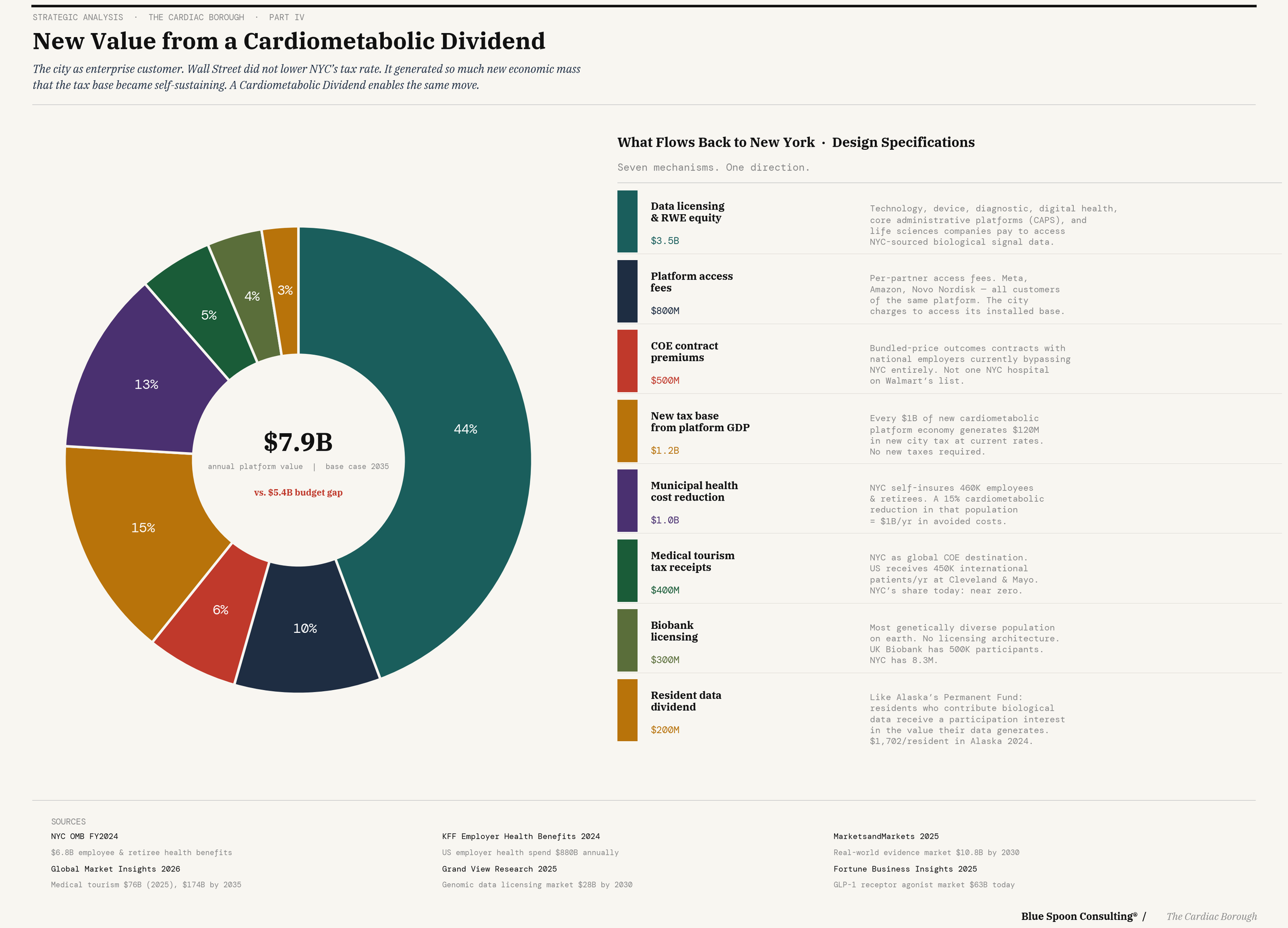
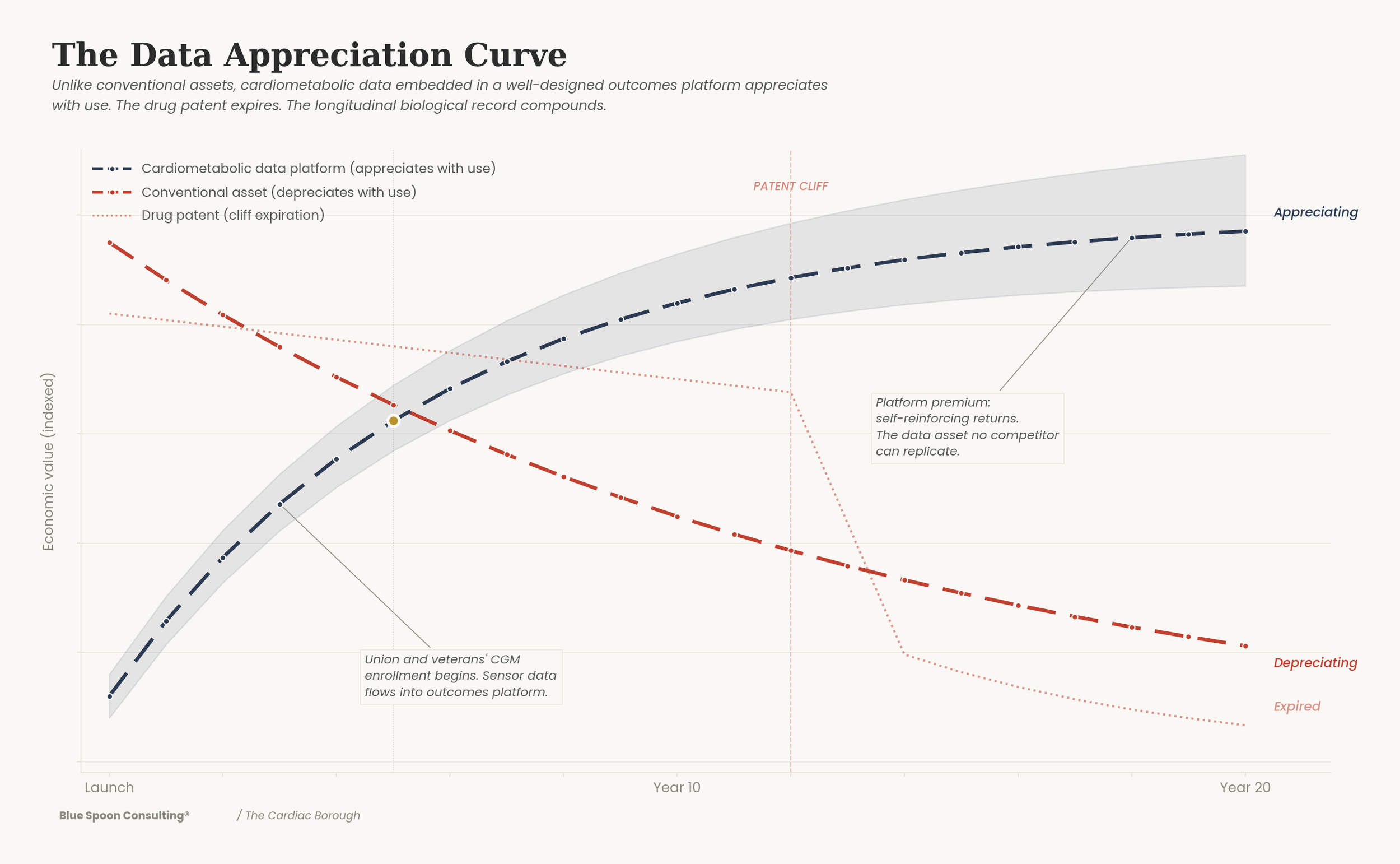
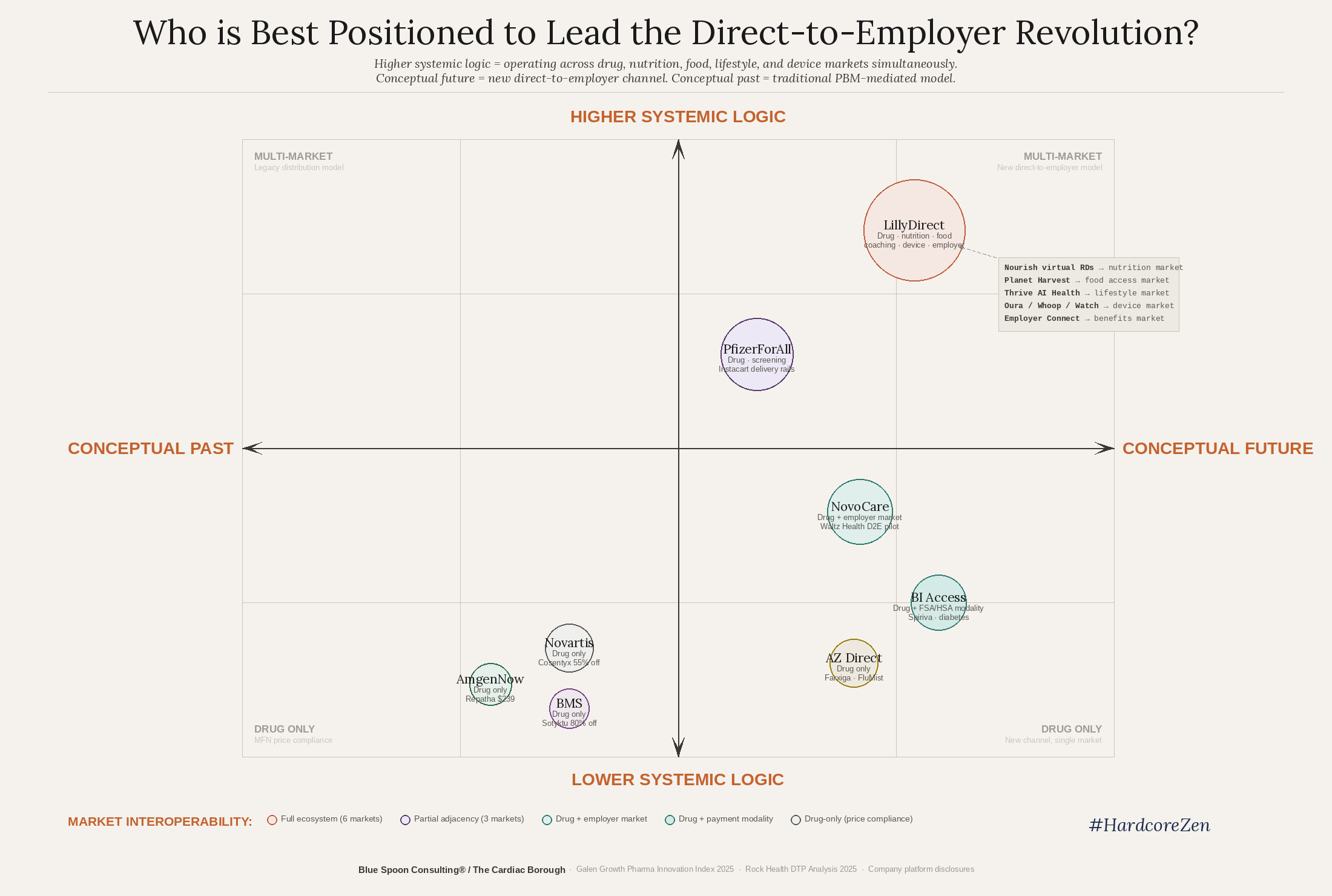


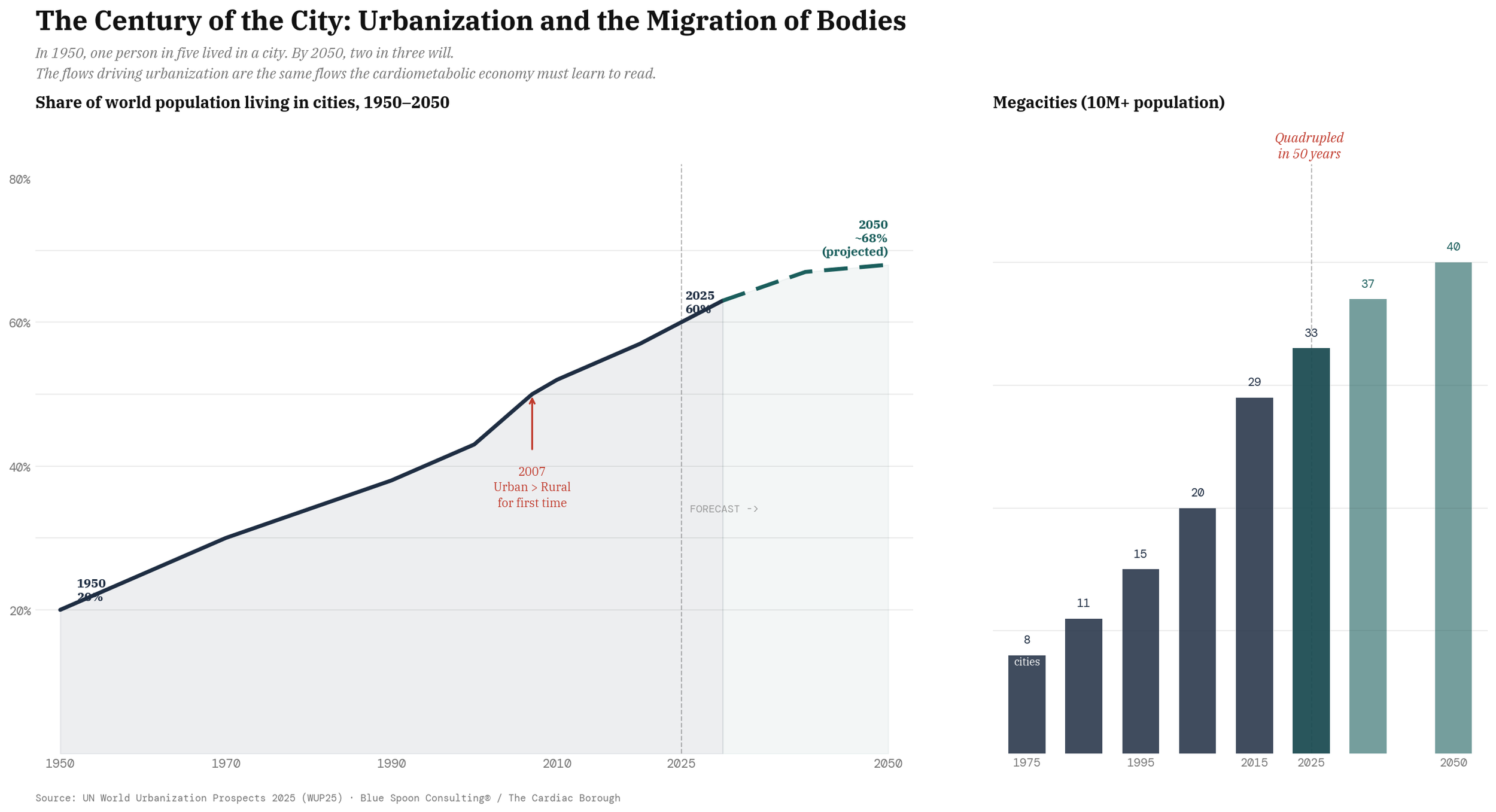
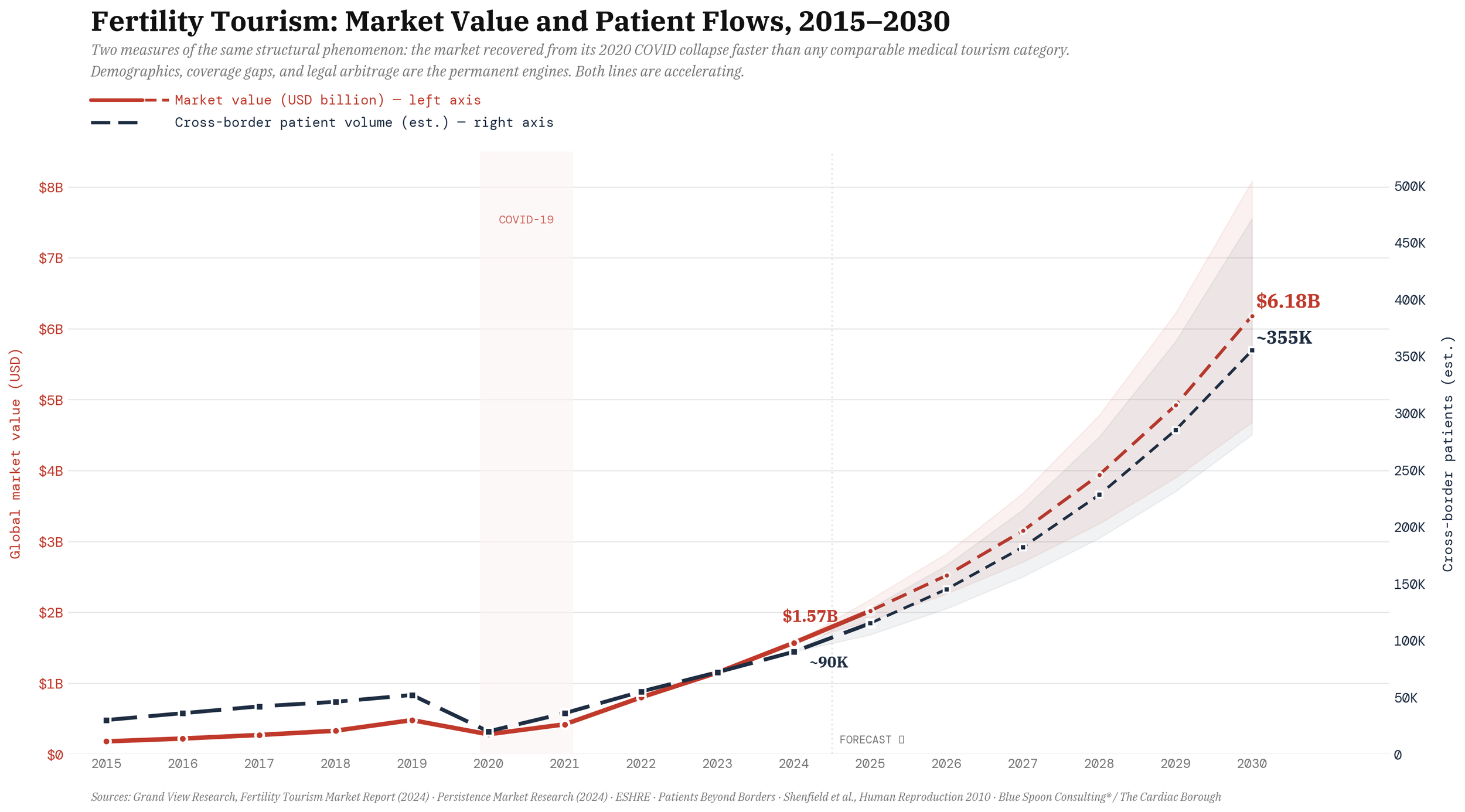
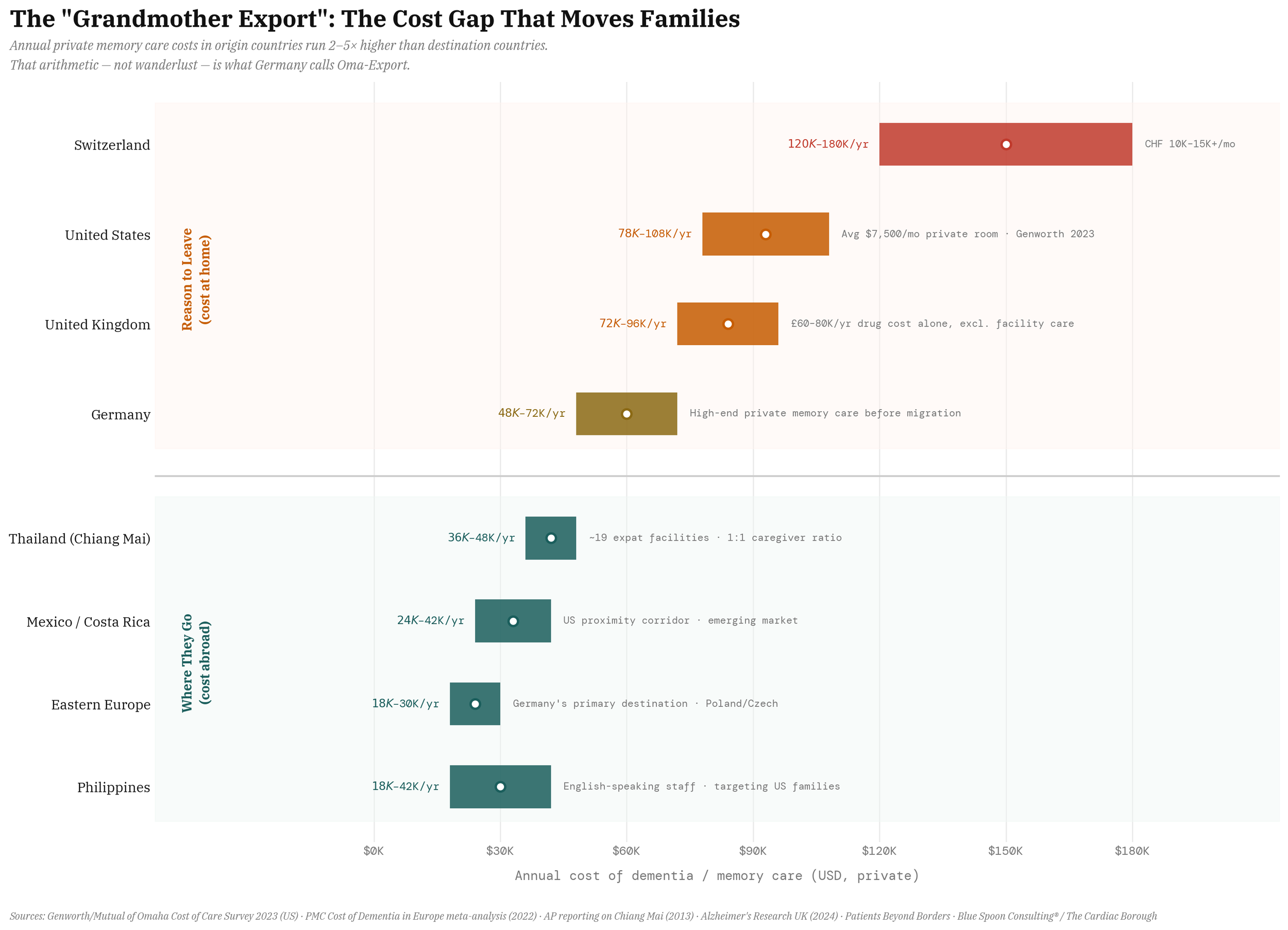
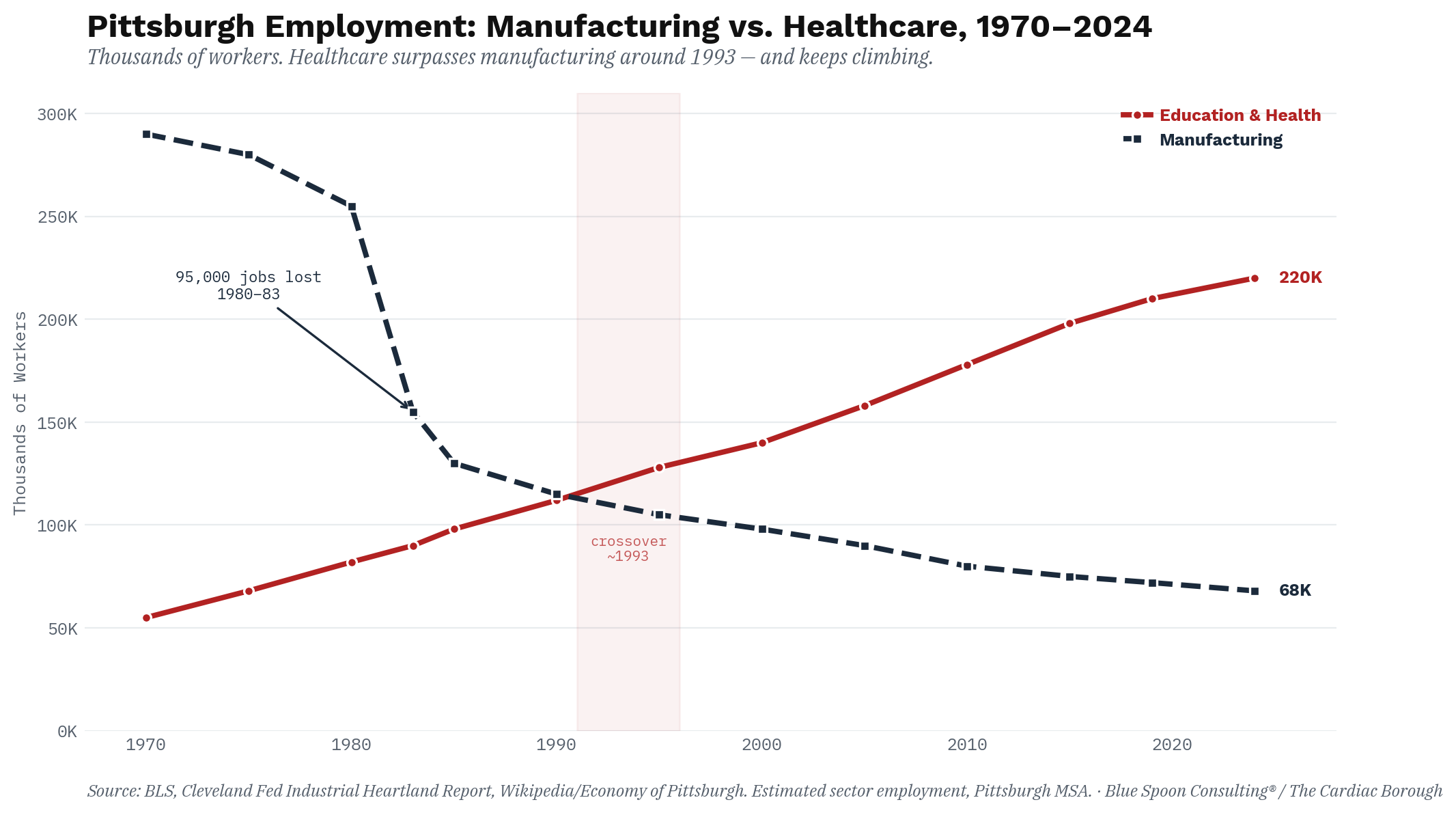

The Cardiac Borough is a four-part strategic essay series by Blue Spoon Consulting examining whether the production of cardiometabolic health can replace the gravitational economic role Wall Street has played in New York City for a century. Published March 2026, the series applies ecosystem-centered market strategy to the question of what happens when healthcare becomes a city's dominant export — and argues that New York has the clinical density, the union workforce, the pharmaceutical corridor, and the institutional assets to build a cardiometabolic platform whose data, protocols, and outcomes become the infrastructure that the AI economy will eventually need to pay to access.
The series draws on Gabriel Winant's The Next Shift, Manuel Castells' network society framework, Stuart Kauffman's autocatalytic set theory, and the direct-to-employer shift in pharmaceutical market access to argue that the cardiometabolic platform premium would work the same way Wall Street's did — but with longitudinal biological data, rather than financial liquidity, at its center. The Cardiometabolic Dividend, introduced in Part IV, proposes a fiscal architecture through which the city captures an equity stake in the commercial value its population's health records generate, before the courts design that architecture one lawsuit at a time.
Written by John G. Singer, Executive Director of Blue Spoon Consulting and author of When Burning Man Comes to Washington: A Field Manual for Riding Chaos.